
CULTIVATING ALSO MEANS EXPERIMENTING.

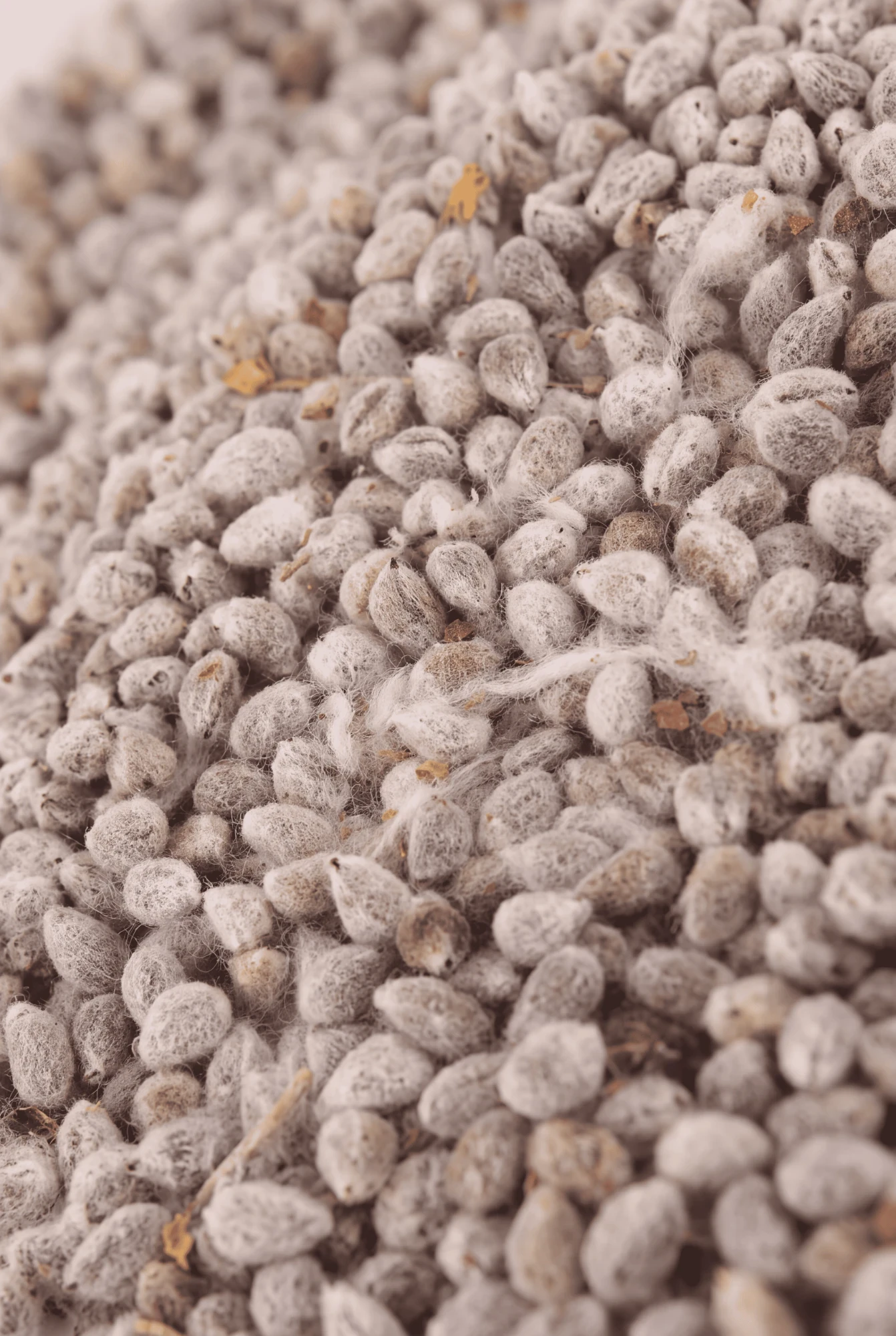
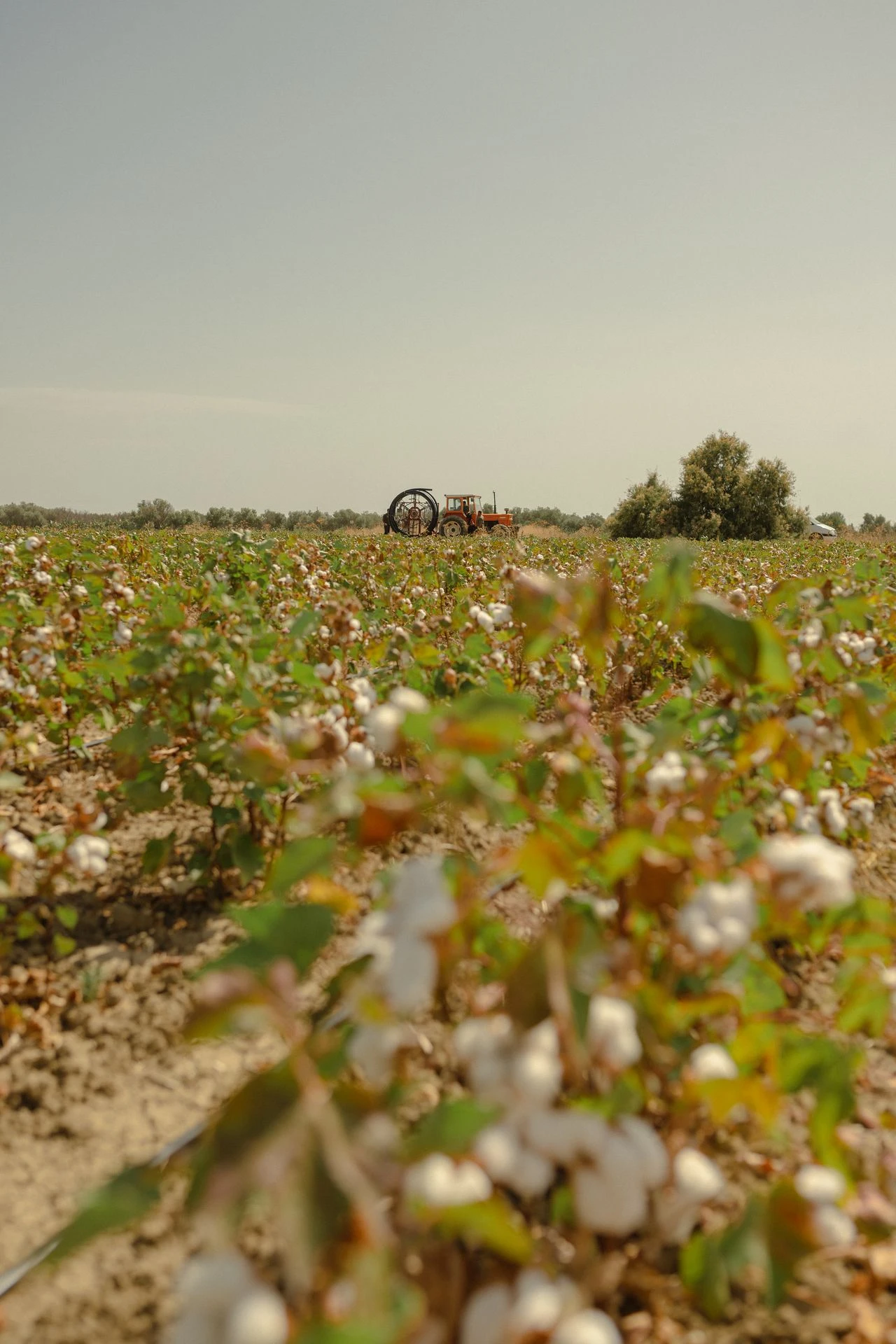
In Gloria Terrae’s fields, we observe how cotton responds to heat, soil conditions and the changing seasons. What we learn guides our work on cotton varieties and cotton seeds, as we seek plants increasingly suited to Sicily’s growing conditions.
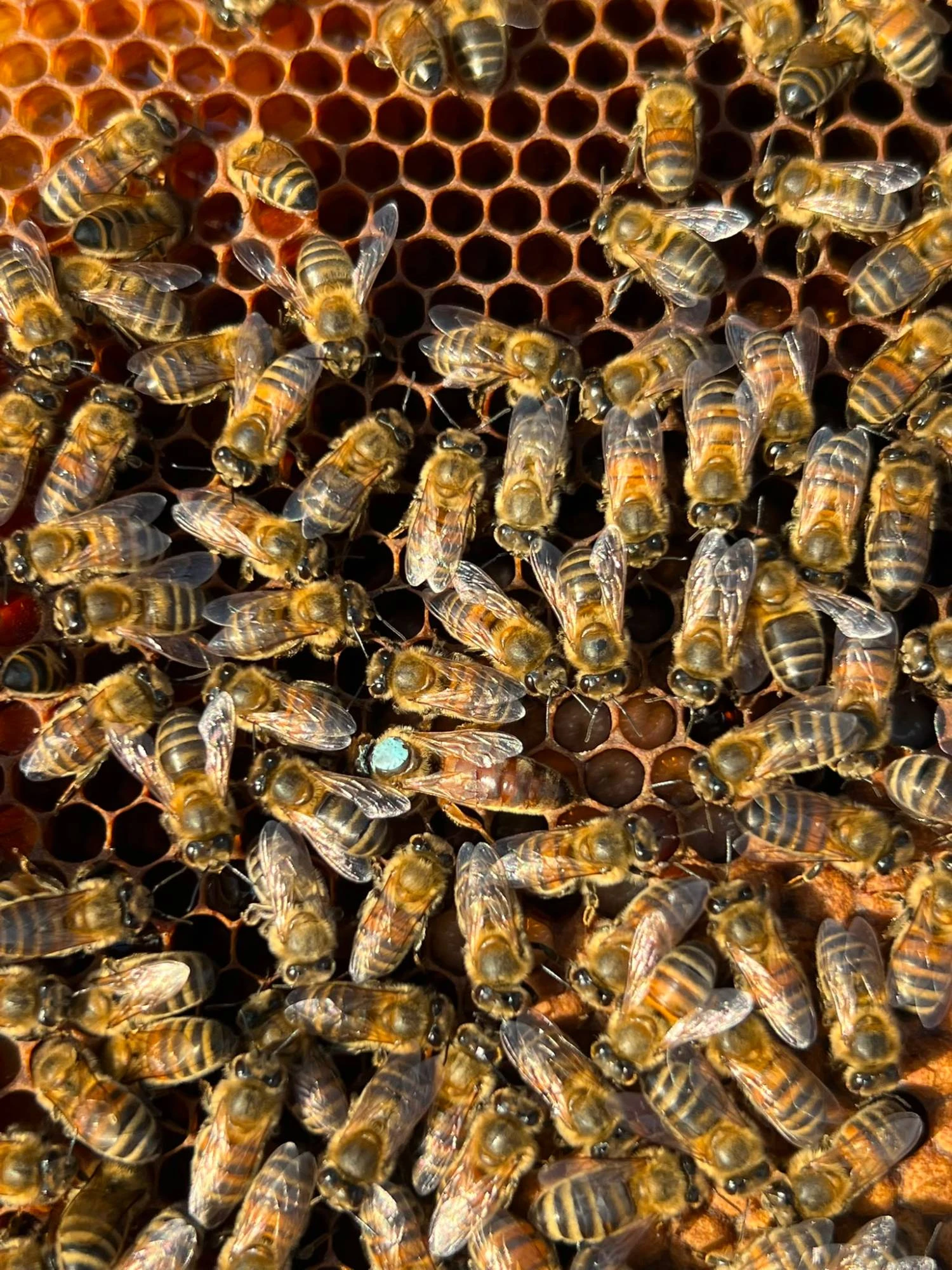
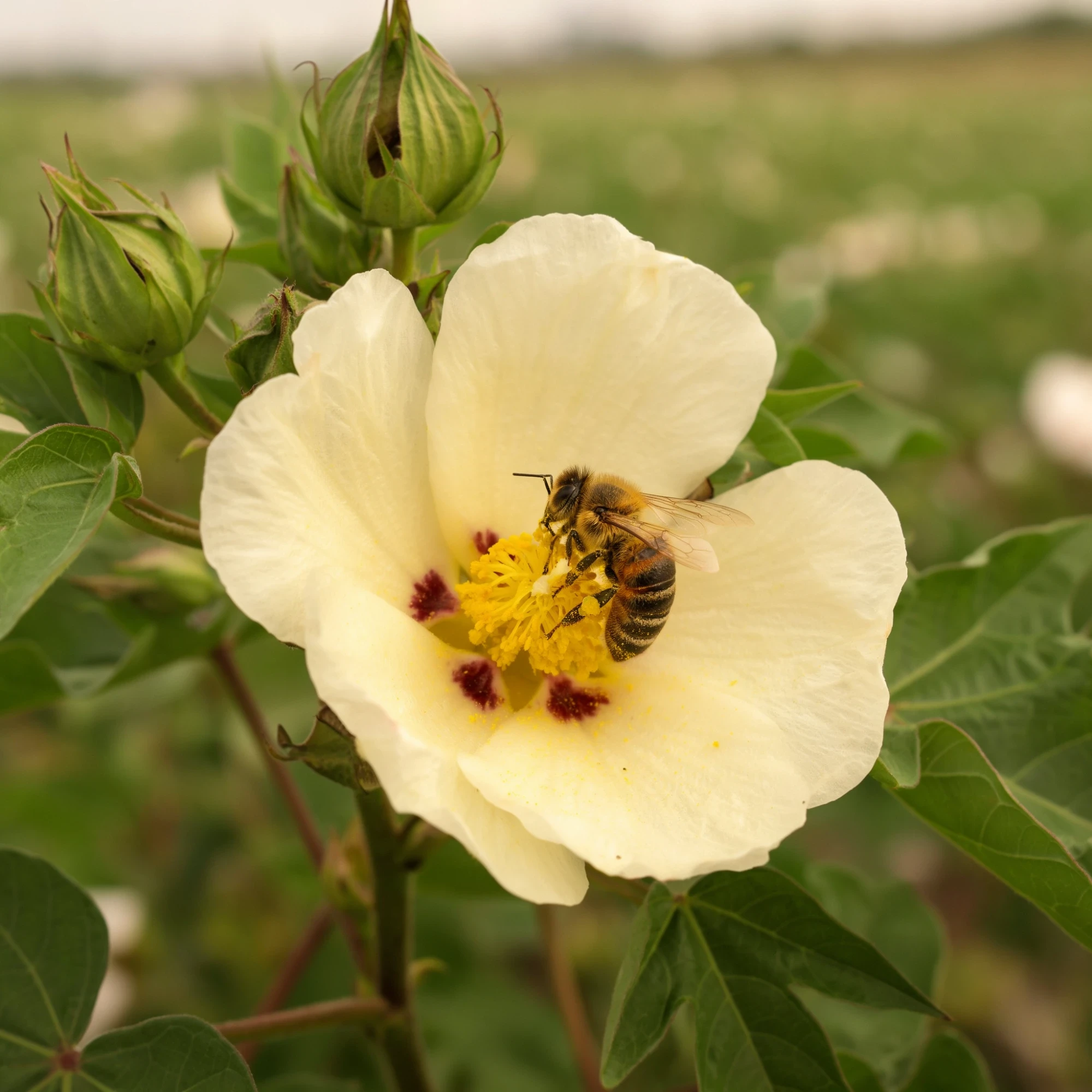
Our agricultural research also follows another path: during cotton flowering, we study the activity of bees and the potential for cotton honey production. These two areas of research—Etna 26 and the study of cotton flowering and its potential for honey production—both begin with direct observation in the fields.
HONEY FROM COTTON.
01 / COTTON HONEY
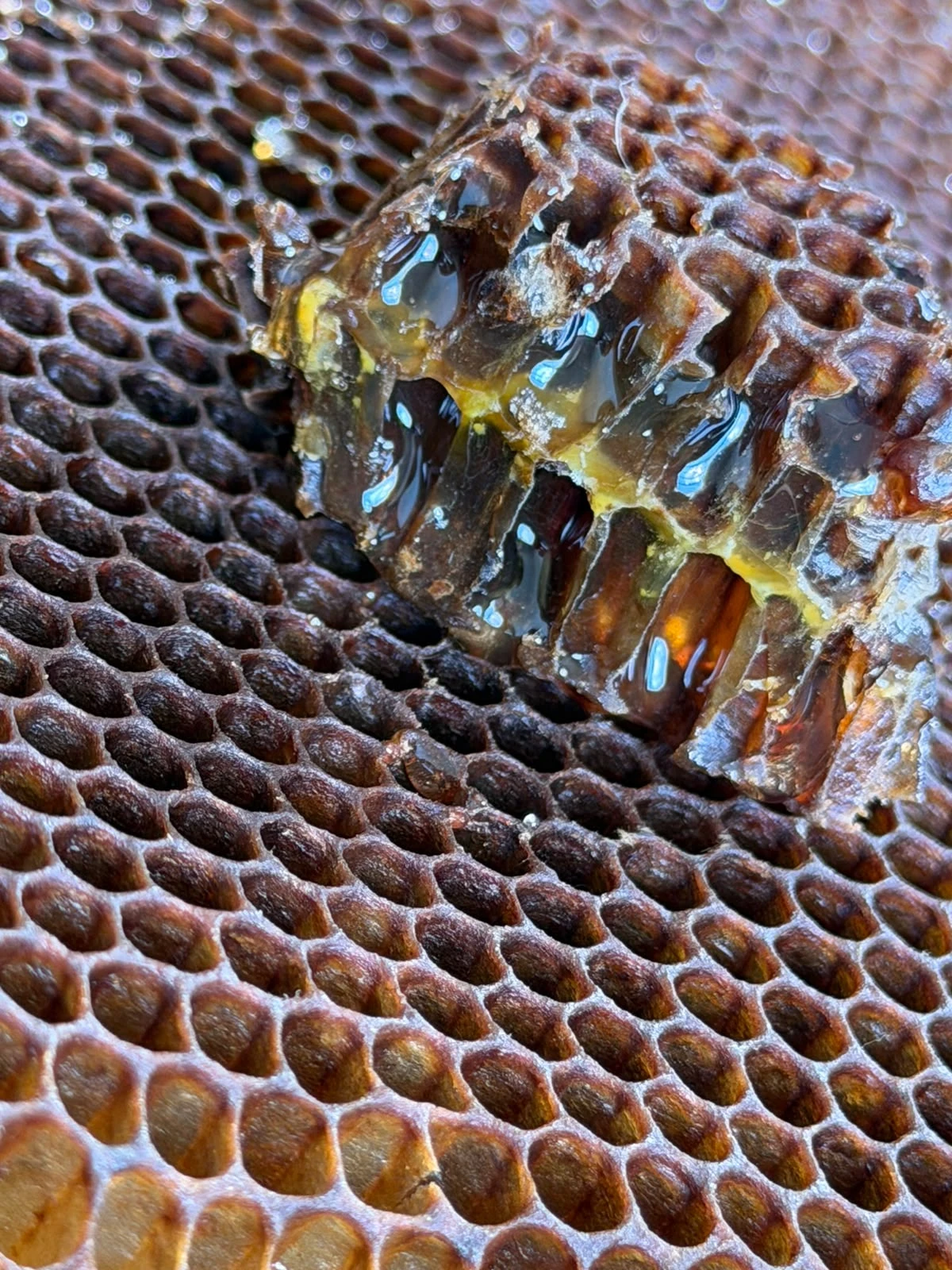
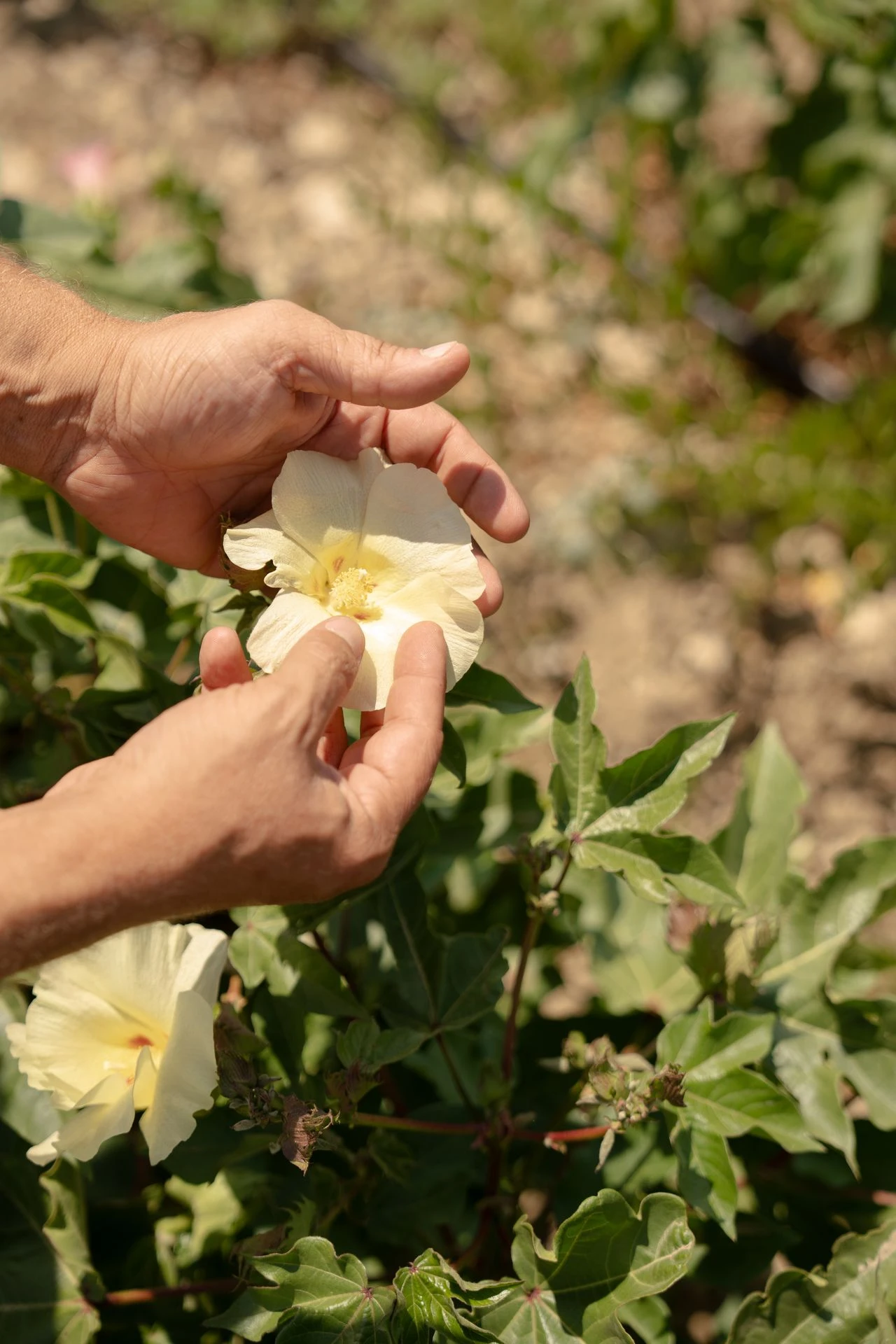
During cotton flowering, the fields attract bees and other pollinating insects. This activity is the focus of experimental research into cotton honey production, with the aim of understanding its production potential and characteristics.
The study examines the relationship between cotton flowering, bee activity and the agricultural environment. The project is still in its experimental phase, allowing us to explore a possible use of the crop beyond fiber production.
RESEARCH
BEGINS
WITH THE LAND
AN ITALIAN SEED FOR AN ITALIAN SUPPLY CHAIN.
Today, most cotton seeds used for cultivation in Italy come from abroad, particularly Greece. Even when cotton fiber is grown and processed in Italy, the varieties used were often developed in other countries.
Italy once had its own cotton varieties, including Cotone Biancavilla, historically grown in Sicily and now considered a lost variety. As cotton farming in Sicily was gradually abandoned during the second half of the twentieth century, seeds and agricultural knowledge associated with the crop were also lost.
Building an Italian textile supply chain that truly begins with cultivation also means working toward an Italian cotton seed. This need underlies Gloria Terrae’s commitment to selecting cotton varieties.
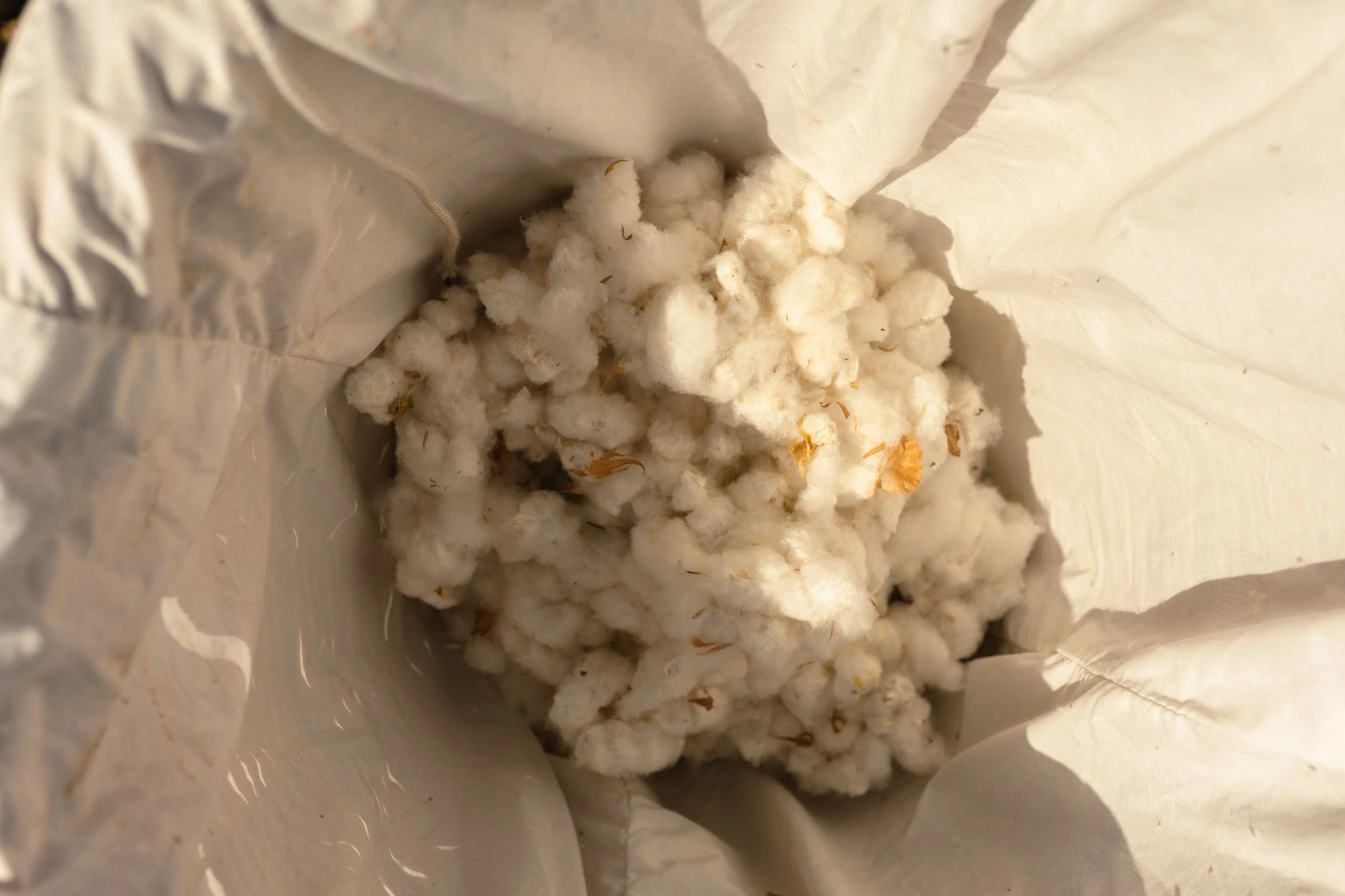
A SEED SHAPEDBY SICILY.
Sicily presents cotton plants with specific growing conditions: very hot summers, soils with different characteristics and natural cycles shaped by the island’s climate. These conditions have led us to explore the development of cotton that can adapt more effectively to the environment in which it grows.
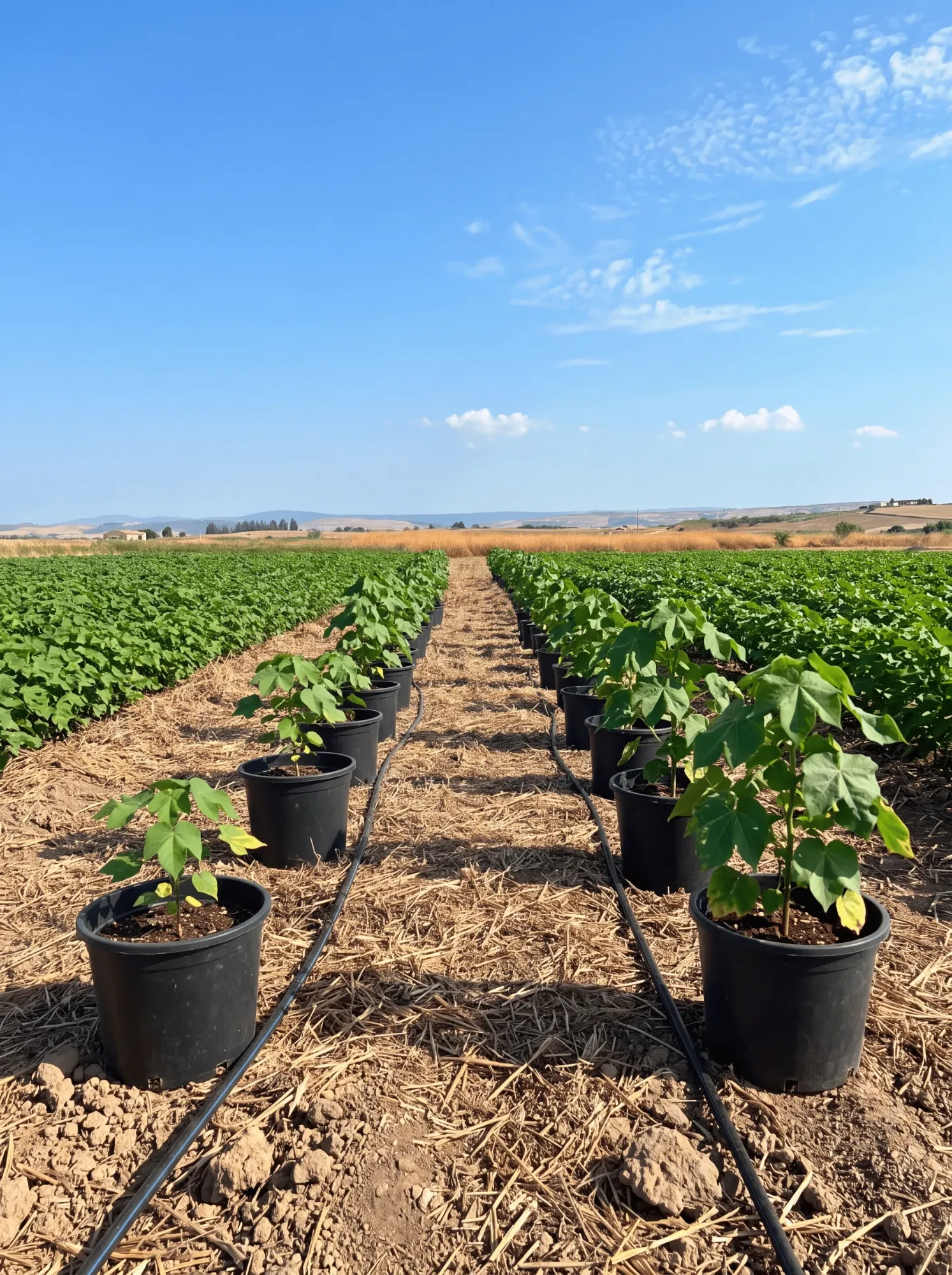
Etna 26 is Gloria Terrae’s cotton breeding project, based on floral hybridization and carried out using organic farming methods. Plants selected for their ability to tolerate high temperatures are crossbred with the aim of developing productive cotton suited to local soil conditions.
The research follows successive generations to observe how selected traits are passed on and become established over time. The seed is central to this process: it represents the starting point for building a closer relationship between the plant and the place where it grows.
Etna 26 aims to develop cotton selected in Sicily, with an agricultural identity that begins with the seed and takes shape in the island’s growing conditions.
Gloria Terrae