
SICILIAN
COTTON
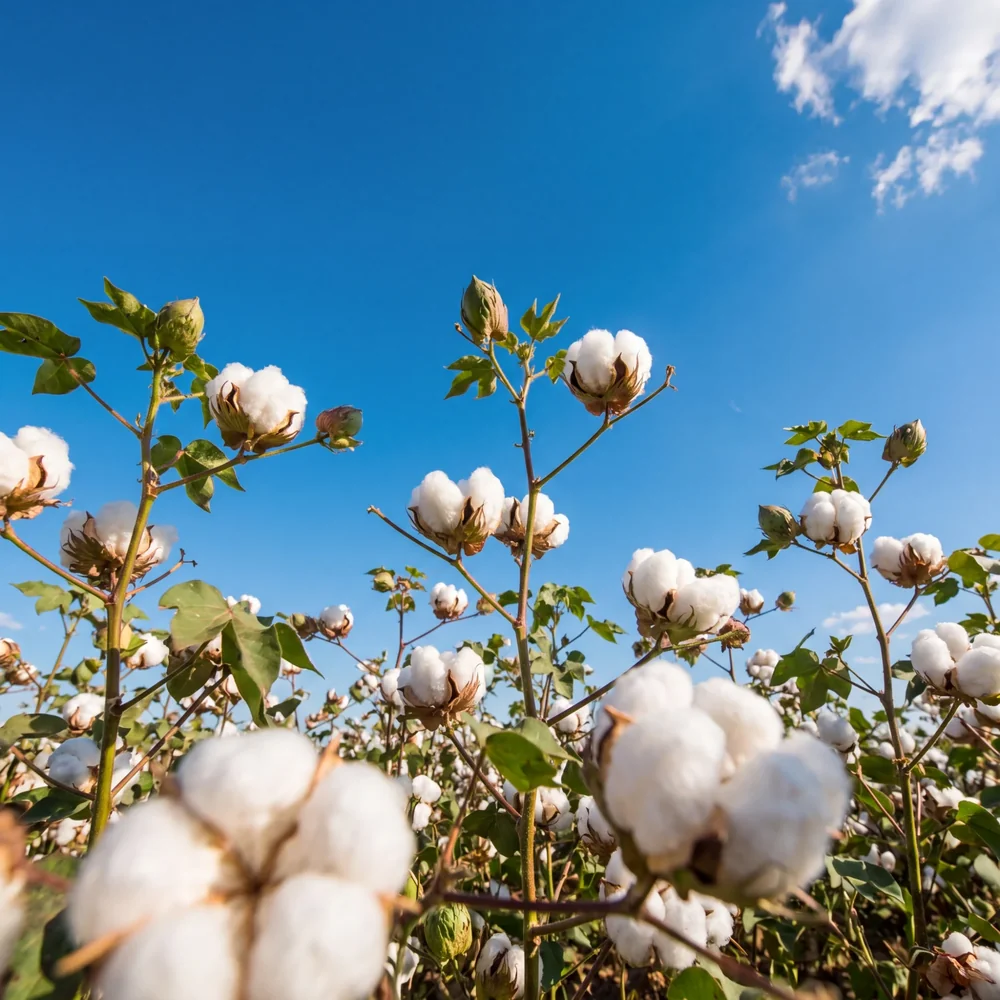
Before yarn comes fiber. Before fiber, the cotton plant. Its quality begins with the seed, the soil and research carried out in the field, long before the cotton boll opens.

COTTON
RETURNS TO
SICILY.
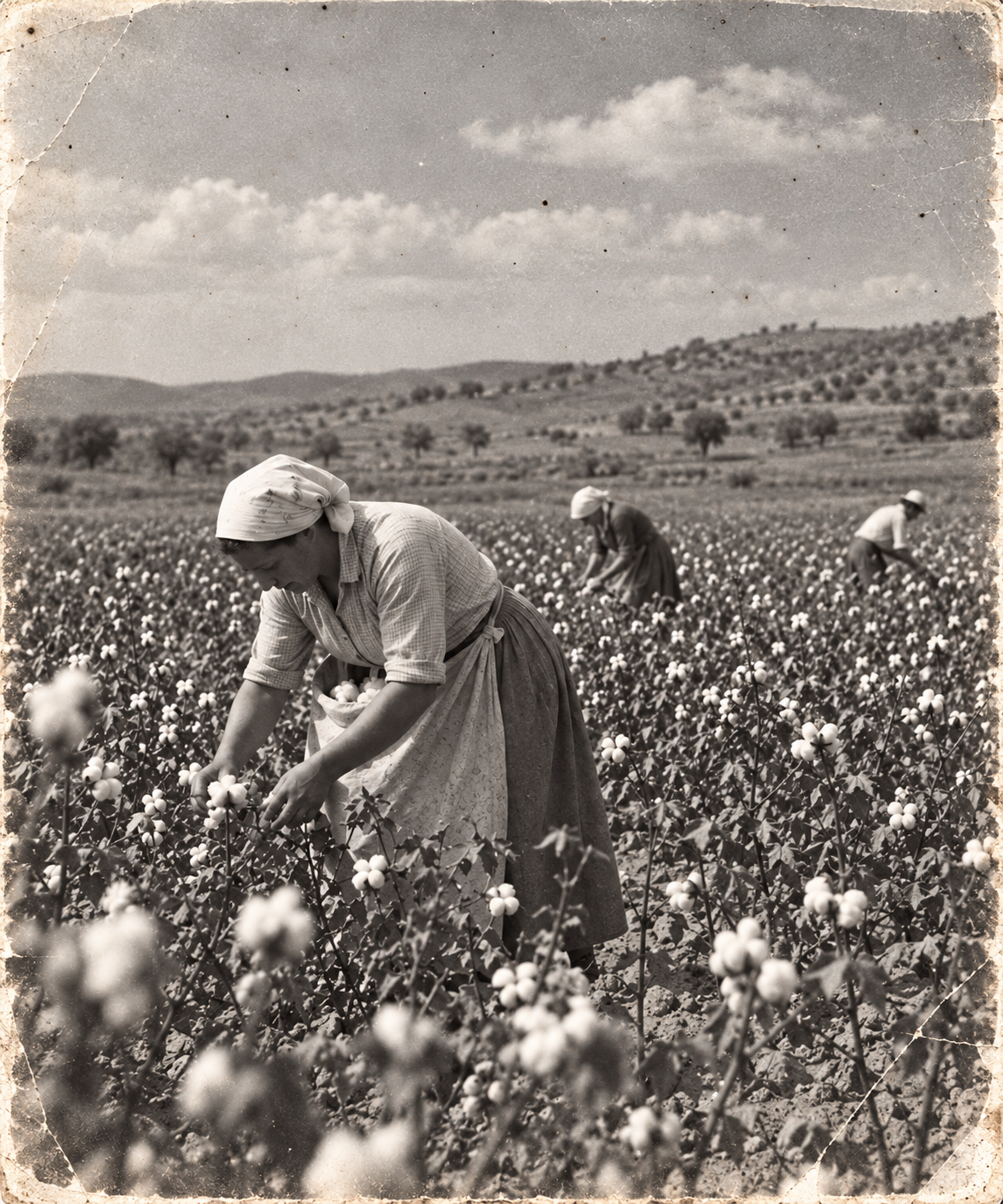
Cotton farming in Sicily has a history spanning centuries. Agricultural and irrigation knowledge that had spread across the Mediterranean before the year 1000 helped establish the crop on the island. In the centuries that followed, Sicilian cotton supplied local trade and manufacturing and reached textile markets in northern Italy.
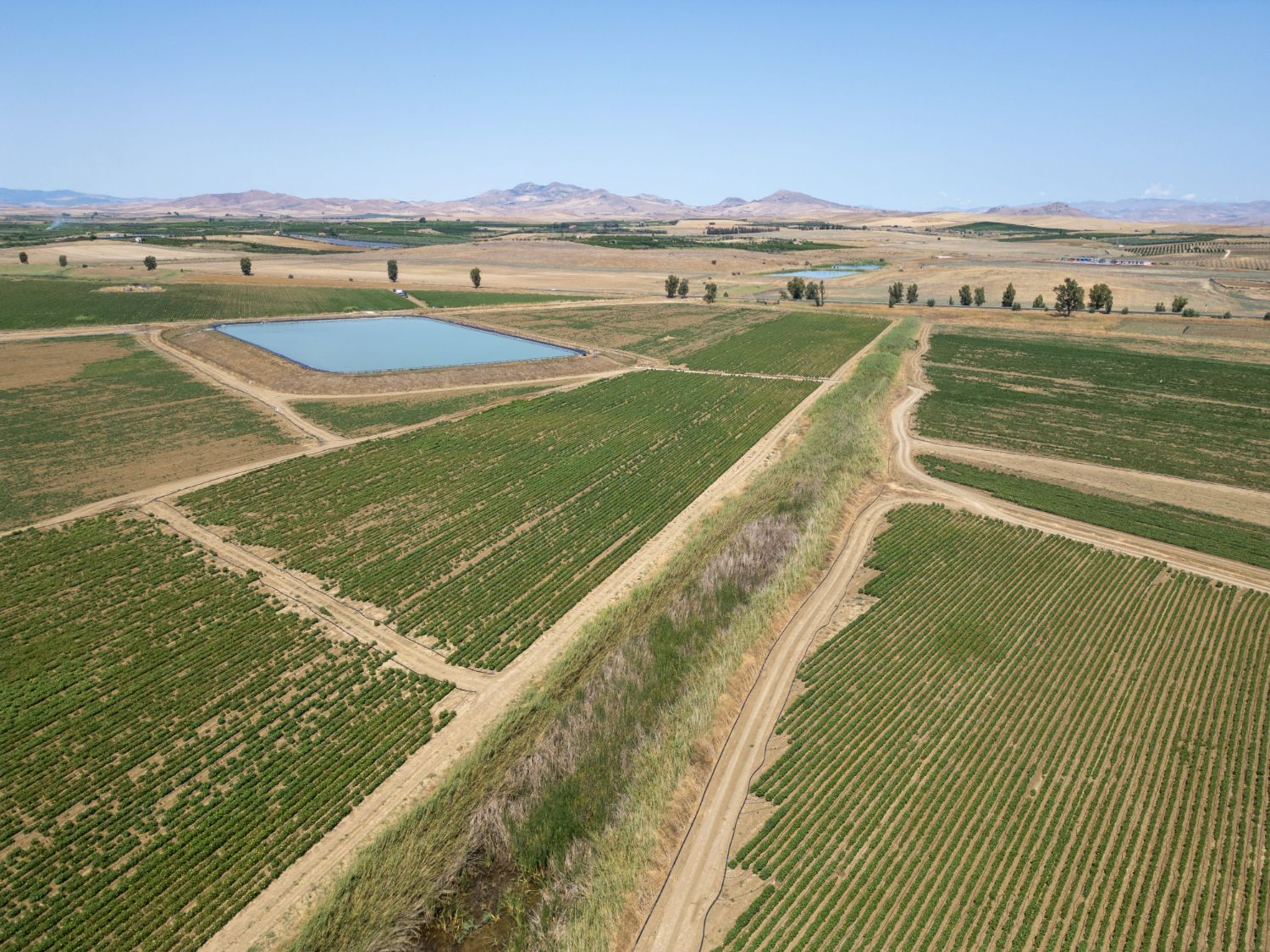
During the twentieth century, foreign competition, production costs and the absence of a suitable supply chain led to the gradual abandonment of cotton cultivation. Gloria Terrae has revived this agricultural tradition in the fields of Ramacca, on the Catania Plain.
Seven years of cotton cultivation in different parts of Sicily have helped us understand the needs of the cotton plant and develop agronomic practices suited to the island's climate. Today, this work focuses on producing traceable cotton fiber for the Italian textile supply chain.
DIFFERENT TYPES OF COTTON FOR DIFFERENT YARNS.
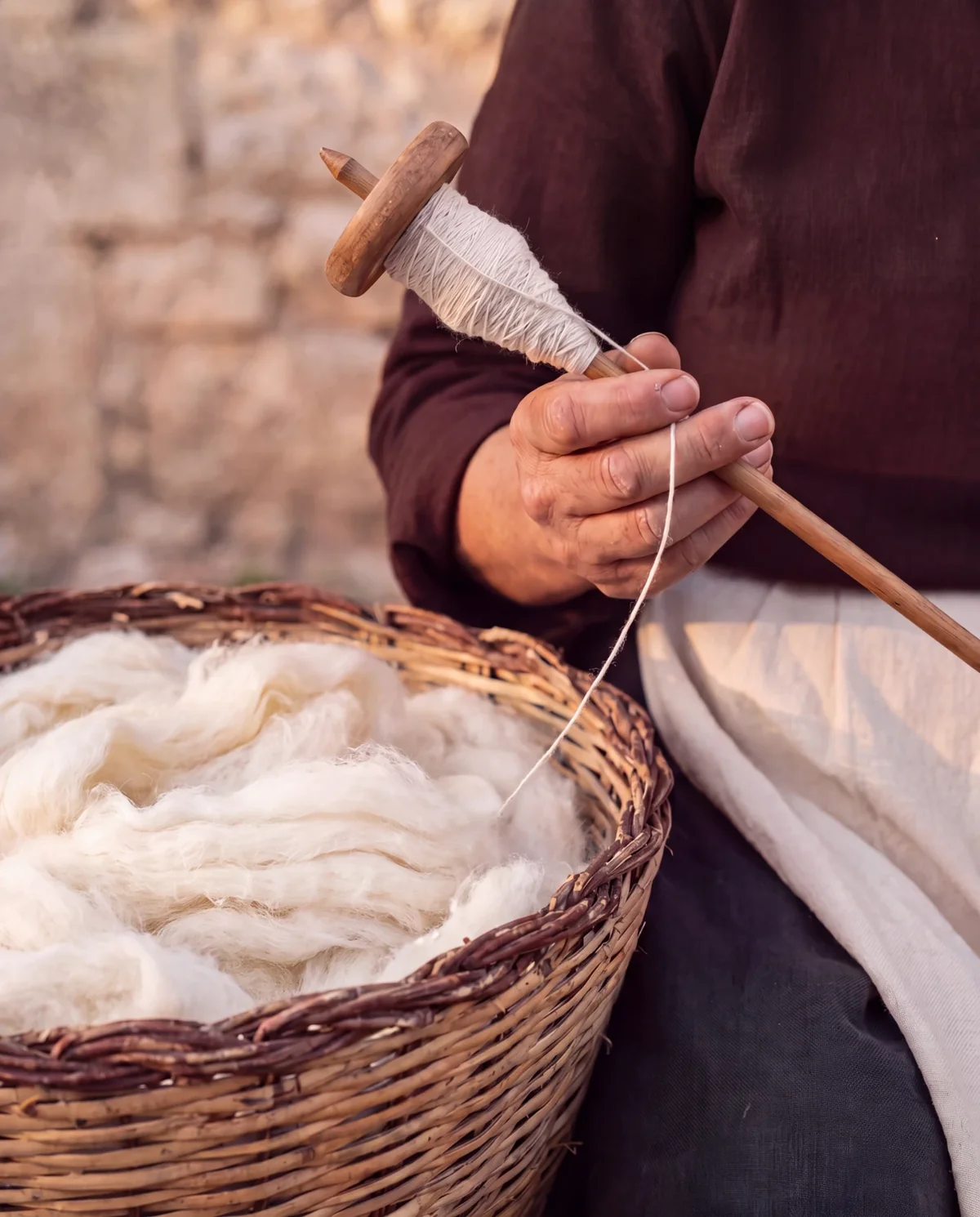
In the fields of Ramacca, we grow cotton varieties selected for their fiber characteristics and their ability to adapt to conditions on the Catania Plain. Length, fineness, strength and uniformity are the main properties we consider in relation to subsequent textile processing.
Some varieties produce fibers suited to fuller, more structured yarns. Long-staple cotton, by contrast, makes it possible to produce finer, more even and stronger yarns for applications requiring specific characteristics.
Selection begins with the seed, but the outcome also depends on the soil, water availability, temperatures and harvest timing. For this reason, the selection of cotton varieties is closely linked to the experience gained in the fields and the fiber quality we aim to achieve.
THE COTTON
GROWING CYCLE.
Cotton takes several months to complete its growing cycle. In our fields, sowing generally takes place in April, when temperatures, including nighttime temperatures, favor germination. The exact date depends on soil conditions and the course of the growing season.
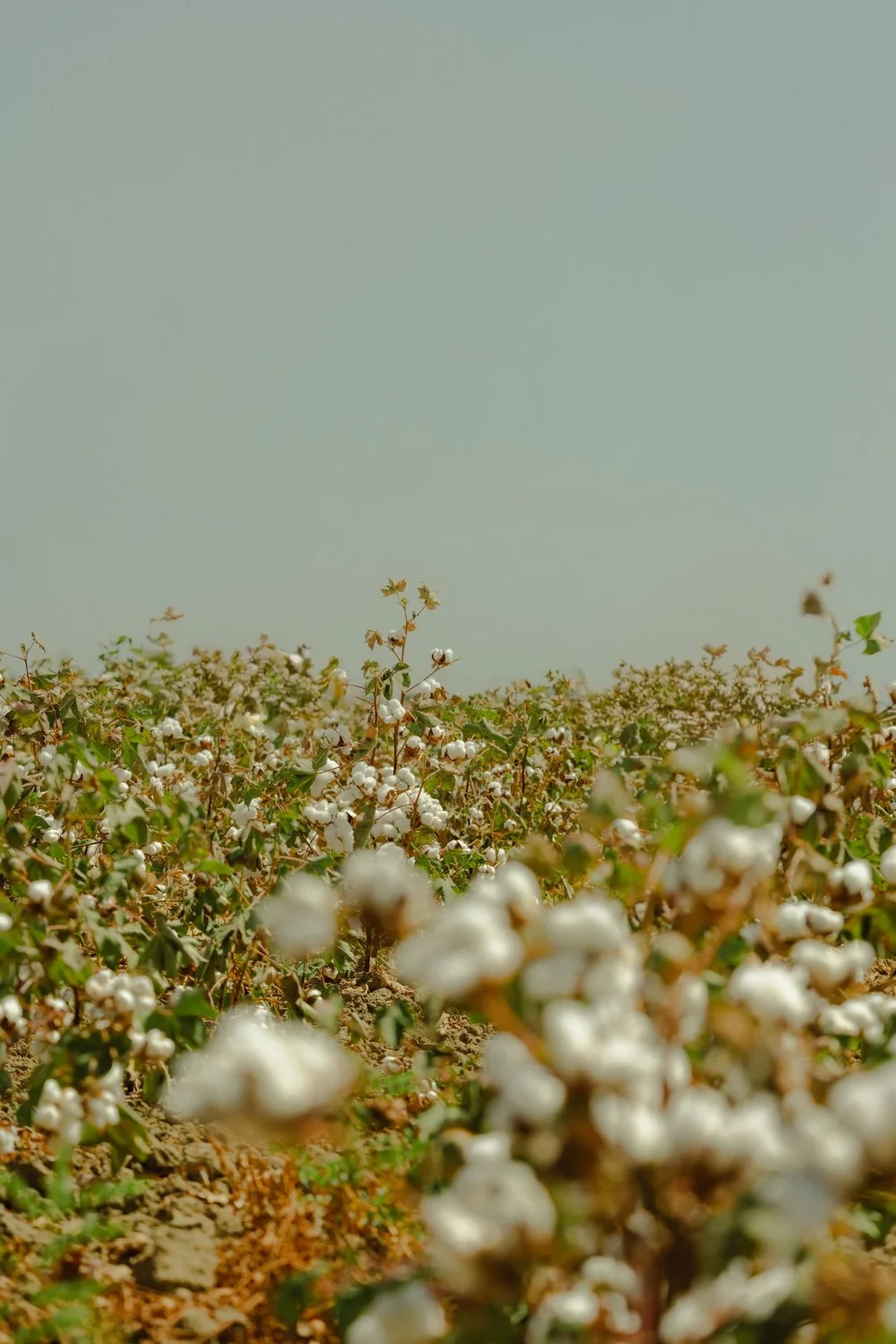
After germination, the plant develops its roots, stem and leaves. Flowering follows, and after fertilization, the cotton bolls begin to form. Inside the bolls, the seeds mature surrounded by developing fiber. When the bolls open, the characteristic white fiber becomes visible.
In Ramacca, flowering generally takes place from July through September, while harvesting is concentrated between late summer and early fall. Timing varies according to the variety and weather conditions. In the event of heavy rain, it may be necessary to harvest earlier to protect the fiber.

RAMACCA — CATANIA PLAIN
GROWING COTTON IN THE HEAT OF THE CATANIA PLAIN.
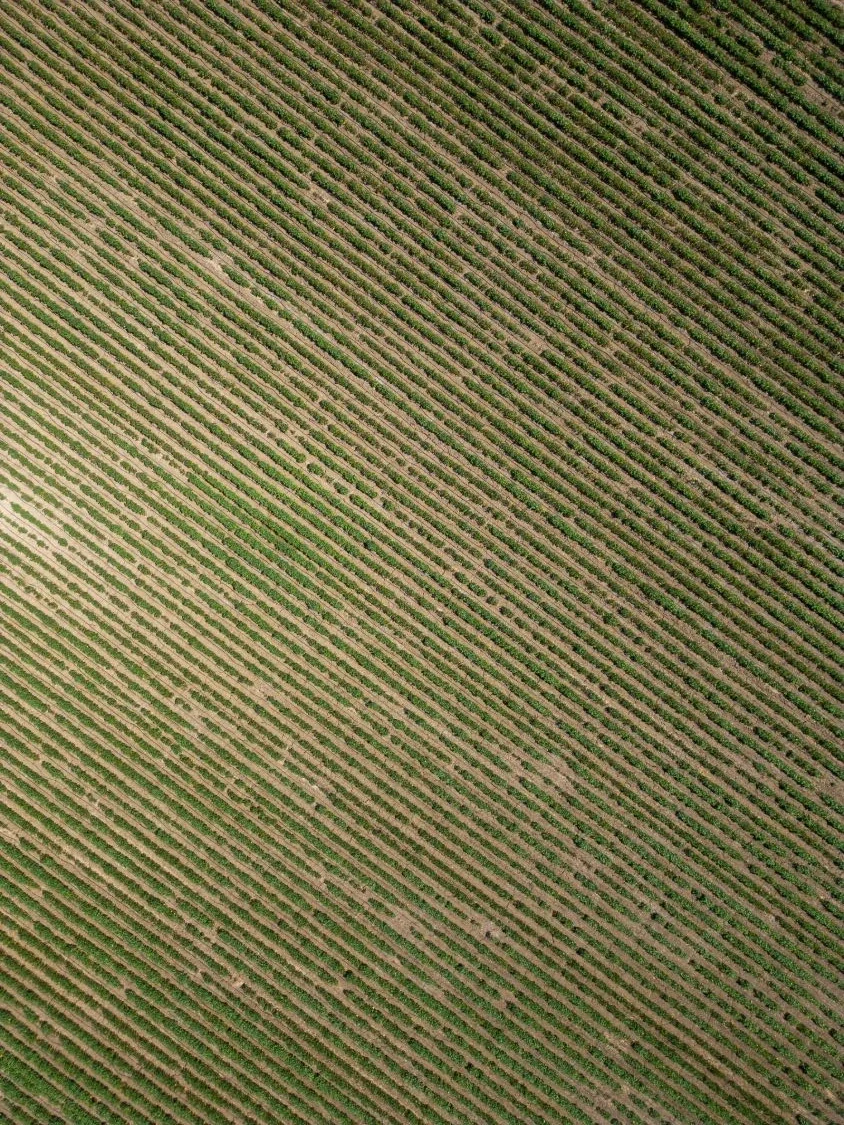
In Ramacca, on the Catania Plain, cotton plants experience very hot summers and considerable temperature differences between day and night. These conditions require particular attention to water availability and the needs of the crop throughout its different stages of development.
Irrigation management takes into account the varieties being grown, soil characteristics, rainfall and seasonal conditions. Decisions are based on actual field conditions rather than treating the crop's water requirements as a fixed quantity.
The timing of water application is also important. Water shortages during critical stages can affect plant growth, flowering and boll formation, reducing yields. By observing the plants, we can adapt irrigation to the needs of the crop.
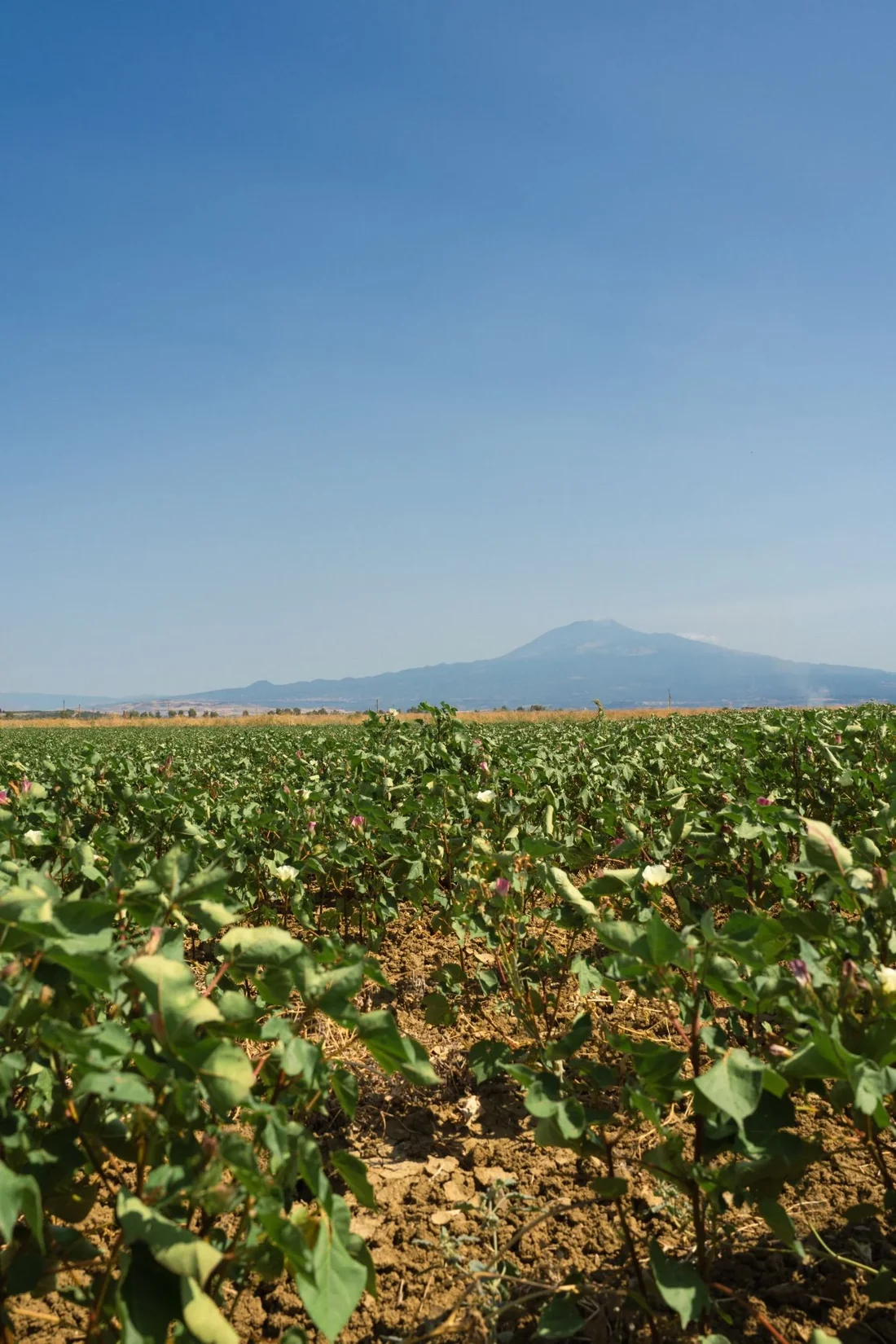
SOIL SHAPED BY MOUNT ETNA.
SILICON — ZEOLITES — MOISTURE
Over time, Mount Etna's volcanic activity has contributed to the composition of soils on the Catania Plain, which also contain materials and mineral components of volcanic origin.
Among these, zeolites are of particular interest. These porous minerals can retain water and influence moisture availability in the soil. In an area characterized by high summer temperatures, the soil's ability to conserve water is an important aspect of agricultural management.
For this reason, we monitor soil moisture and carry out shallow soil cultivation according to the characteristics of the soil and the needs of the plants throughout the growing season.
RAINFED AND IRRIGATED COTTON CULTIVATION.
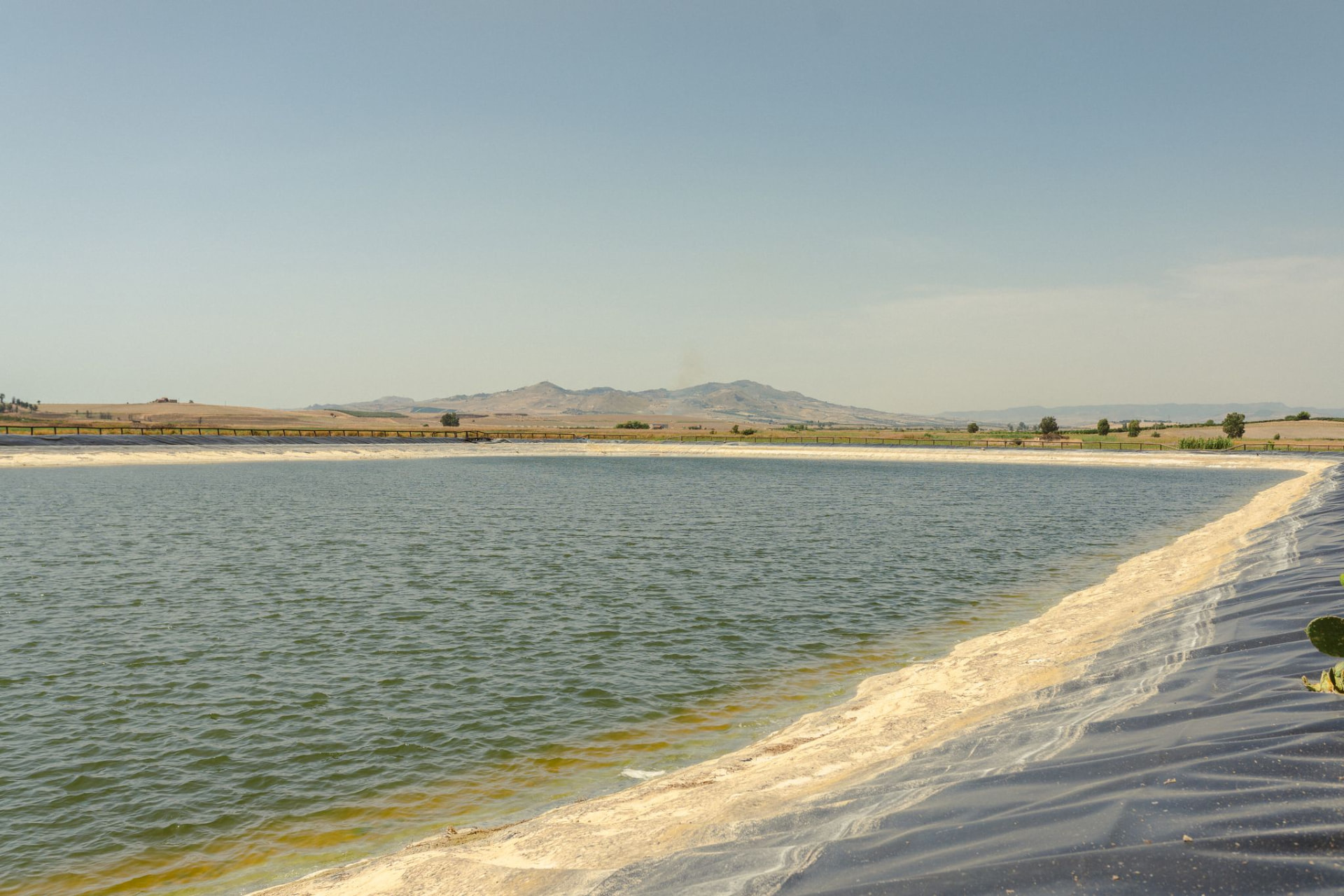
Gloria Terrae grows cotton under both rainfed and irrigated conditions. In rainfed fields, plant growth depends on water stored in the soil and on rainfall, without the use of an irrigation system.
Under these conditions, yields are closely linked to seasonal weather patterns and can be around 1,000 kilograms per hectare. Under different agronomic conditions, production may reach approximately 2,000 kilograms per hectare.
In irrigated fields dedicated to long-staple cotton, yields can reach approximately 3,000 kilograms per hectare. Medium-to-short-staple varieties, by contrast, are grown mainly under rainfed conditions.
The choice of cultivation method depends on the characteristics of the crop and the available water resources.
WEED CONTROL WITHOUT
CHEMICAL HERBICIDES.
Weed control begins before sowing. Using the stale seedbed technique, we prepare the soil in advance to encourage weeds to germinate, then remove them before sowing the cotton. This significantly reduces their presence during the early stages of plant growth.
Throughout the growing season, we cultivate the soil mechanically between the rows. Where agricultural equipment cannot reach, we remove weeds manually with a hoe. This method requires repeated interventions and consistent work, but makes it possible to control weeds without using chemical herbicides.
Shallow soil cultivation also improves soil aeration, limits competition for water and nutrients, and helps retain moisture in deeper soil layers.
HARVESTING AT THE RIGHT TIME.
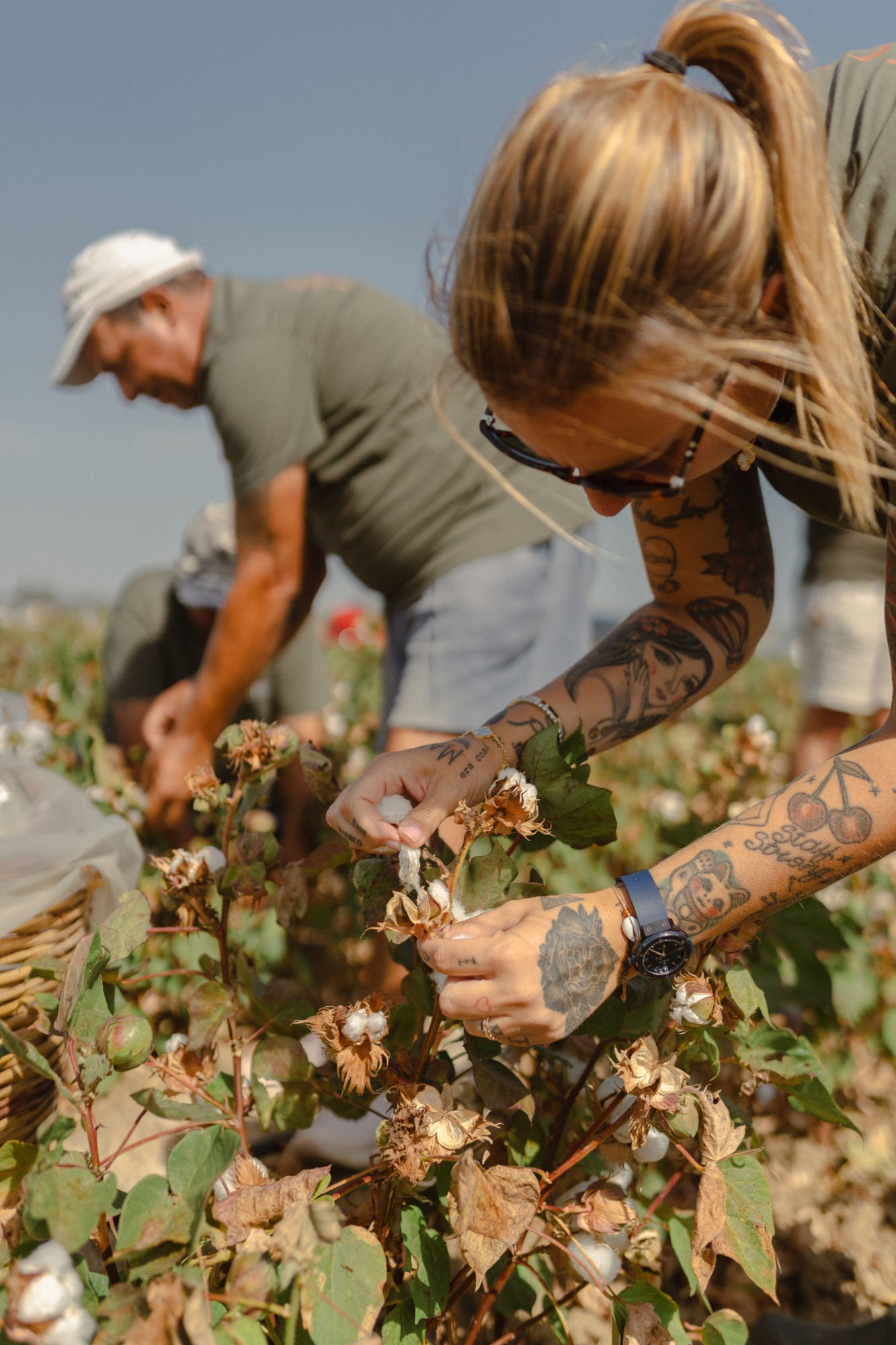
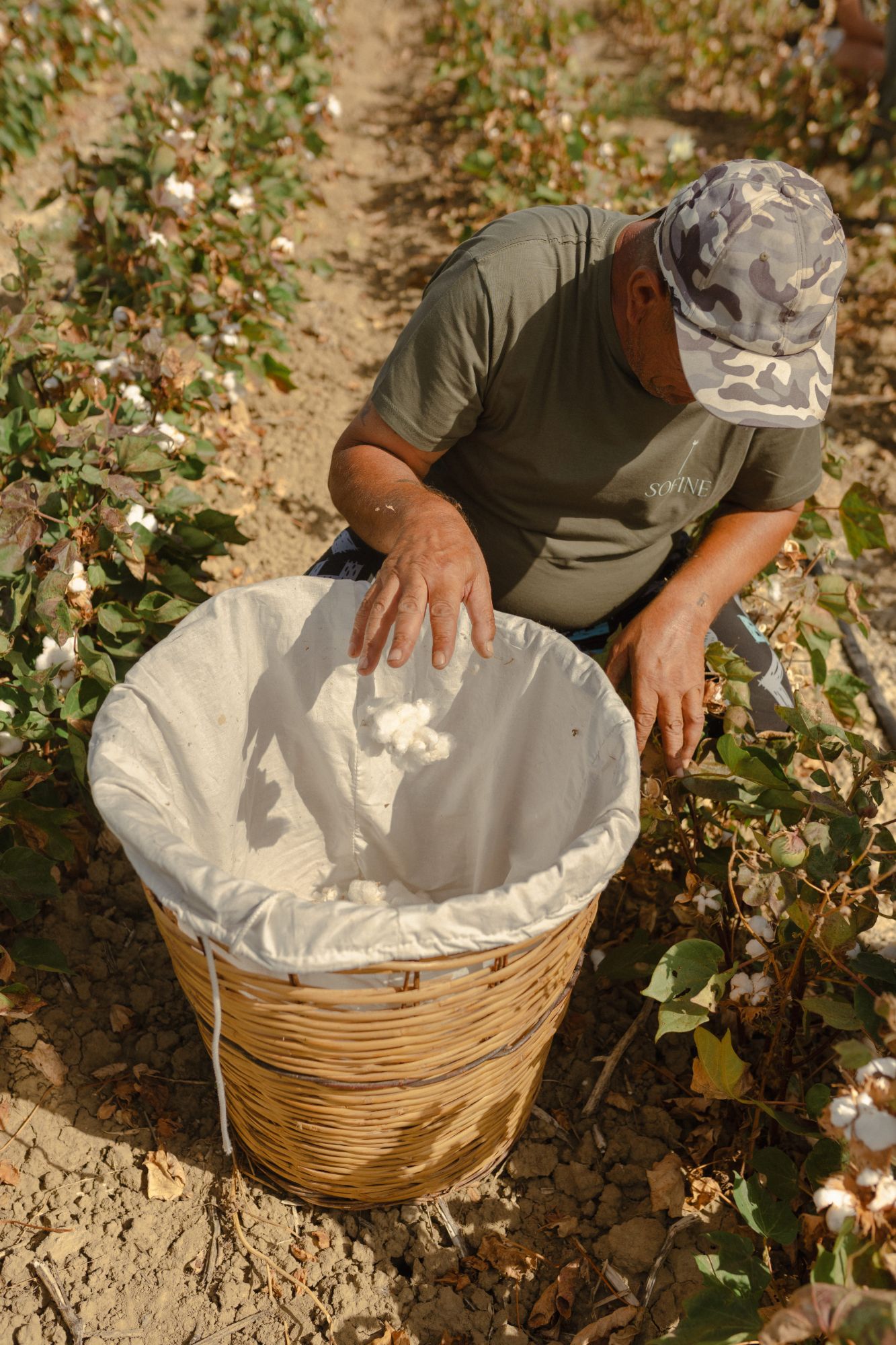
Harvest timing has a direct impact on fiber quality. Cotton harvested too early may still be immature, while waiting too long exposes the open cotton bolls to moisture and rain, potentially affecting the quality and luster of the fiber.
To determine when to harvest, we assess how fully the bolls have opened, the maturity of the fiber and weather forecasts. If heavy rain is expected, harvesting may be brought forward to protect cotton that has already matured.
After harvesting, the cotton is stored under controlled conditions to prevent excessive heat and moisture from causing fermentation. The subsequent ginning process separates the fiber from the seeds and plant debris, preparing it for further processing in the textile supply chain.
FROM SOIL TO FIBER.
Cotton cultivation follows a cycle that begins with soil preparation and ends with the cotton harvest. Through thirteen stages, the images show how the plant develops: the first leaves emerge, flowering follows, and finally the cotton bolls mature and open.
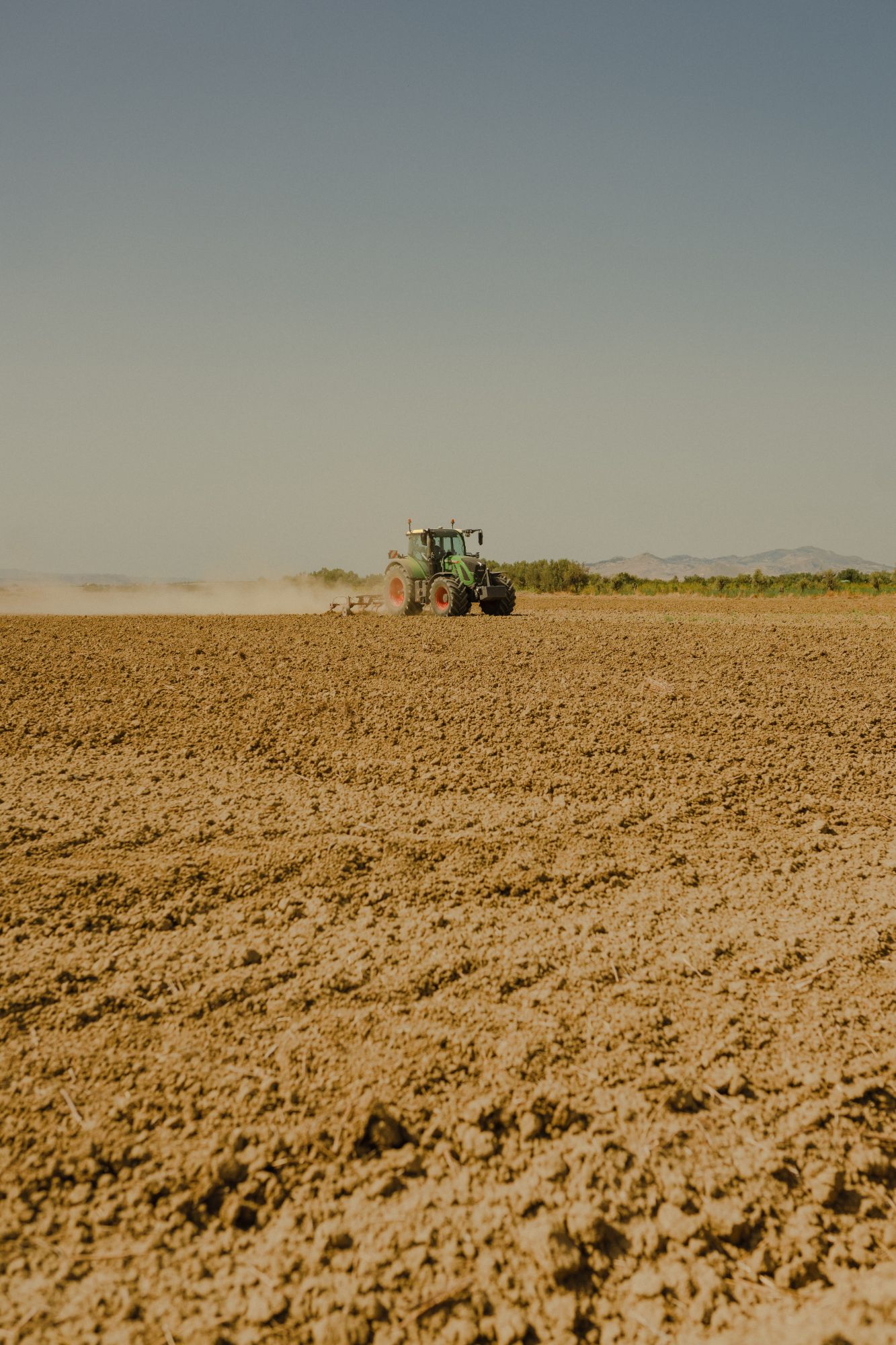
SOIL PREPARATION
Preparing the soil creates the conditions needed for sowing and subsequent root development.
01 / 13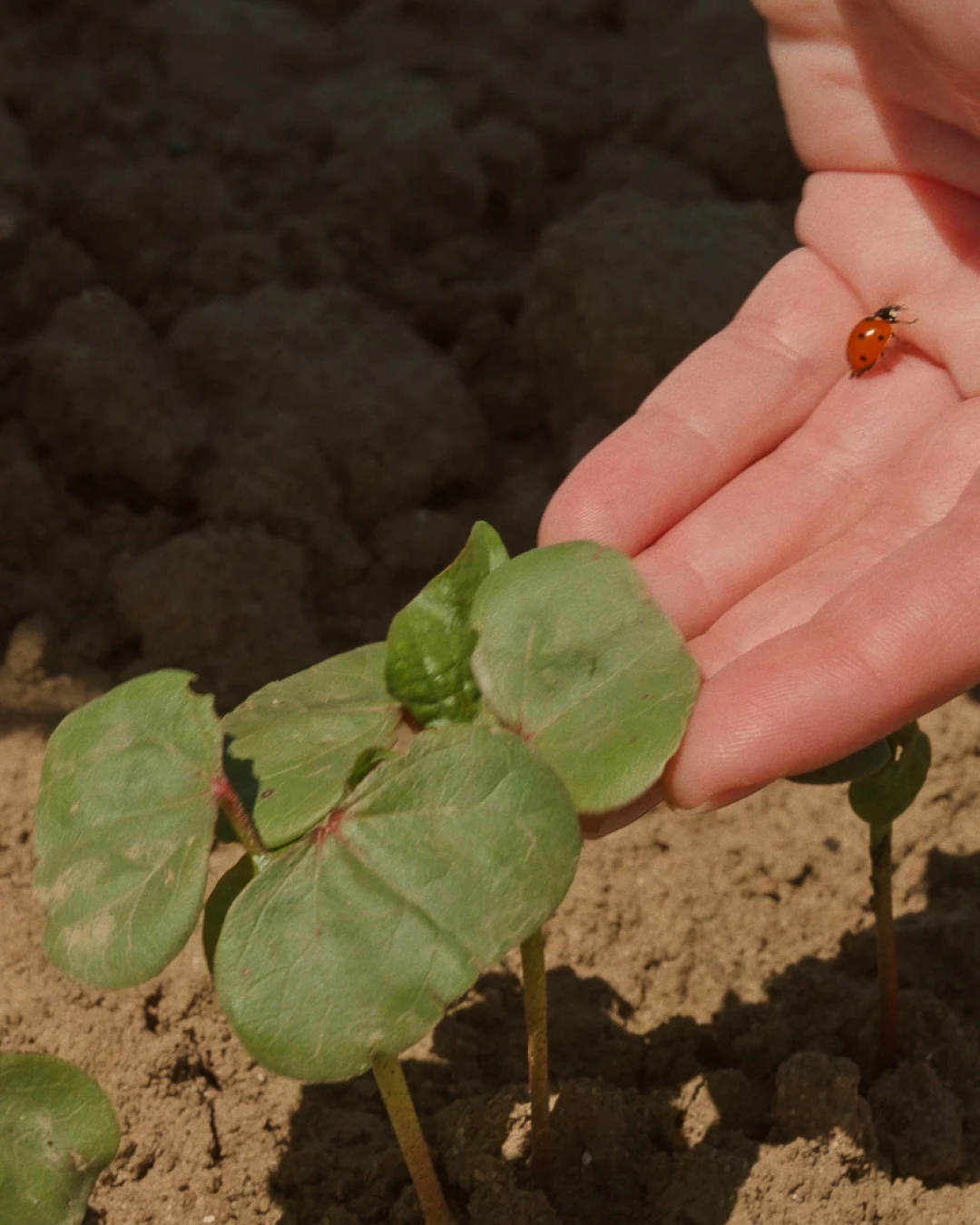
EMERGENCE
The first cotyledons emerge from the soil, marking the beginning of cotton plant growth.
02 / 13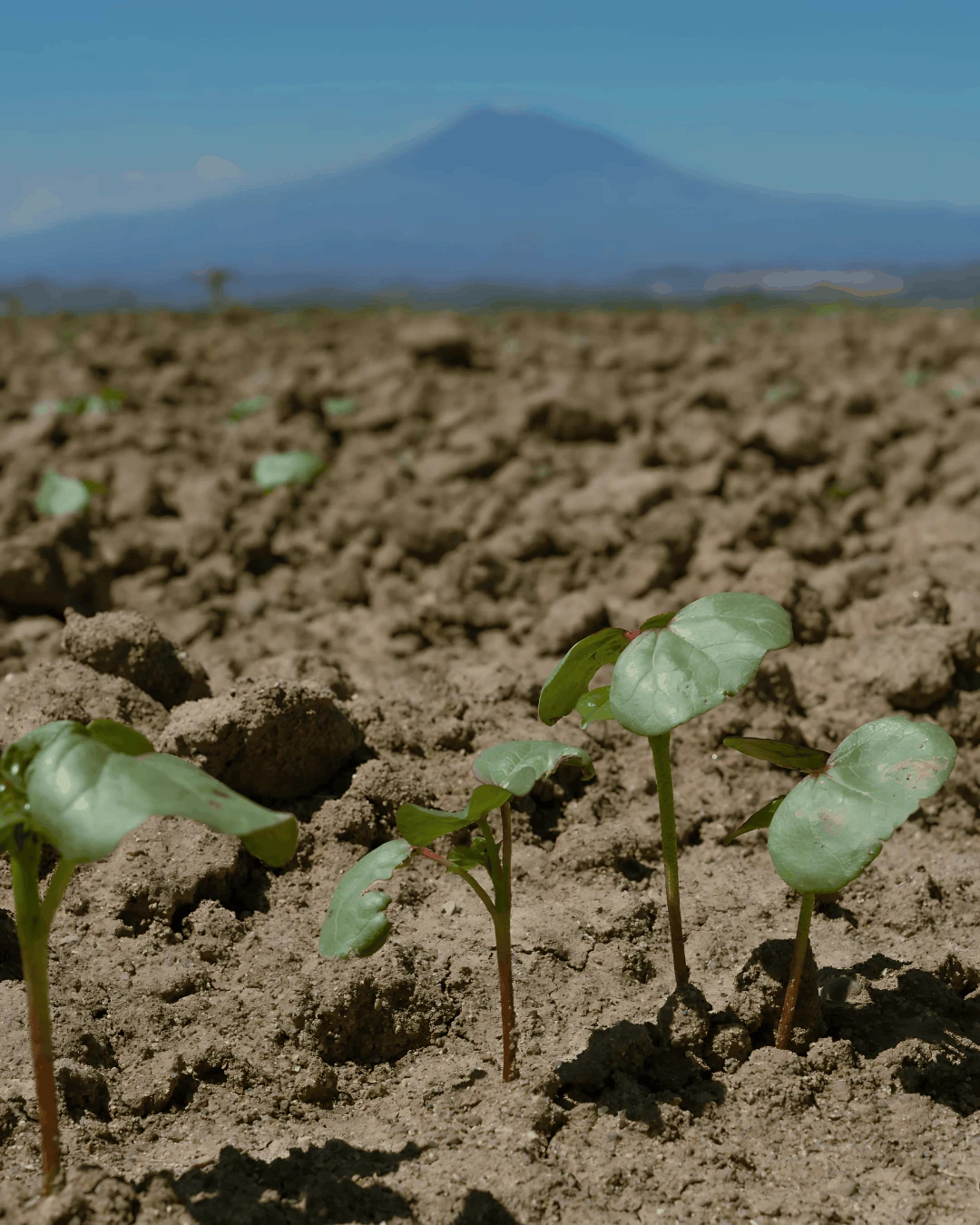
YOUNG COTTON PLANTS
Young plants establish their roots and develop their first leaves along the rows.
03 / 13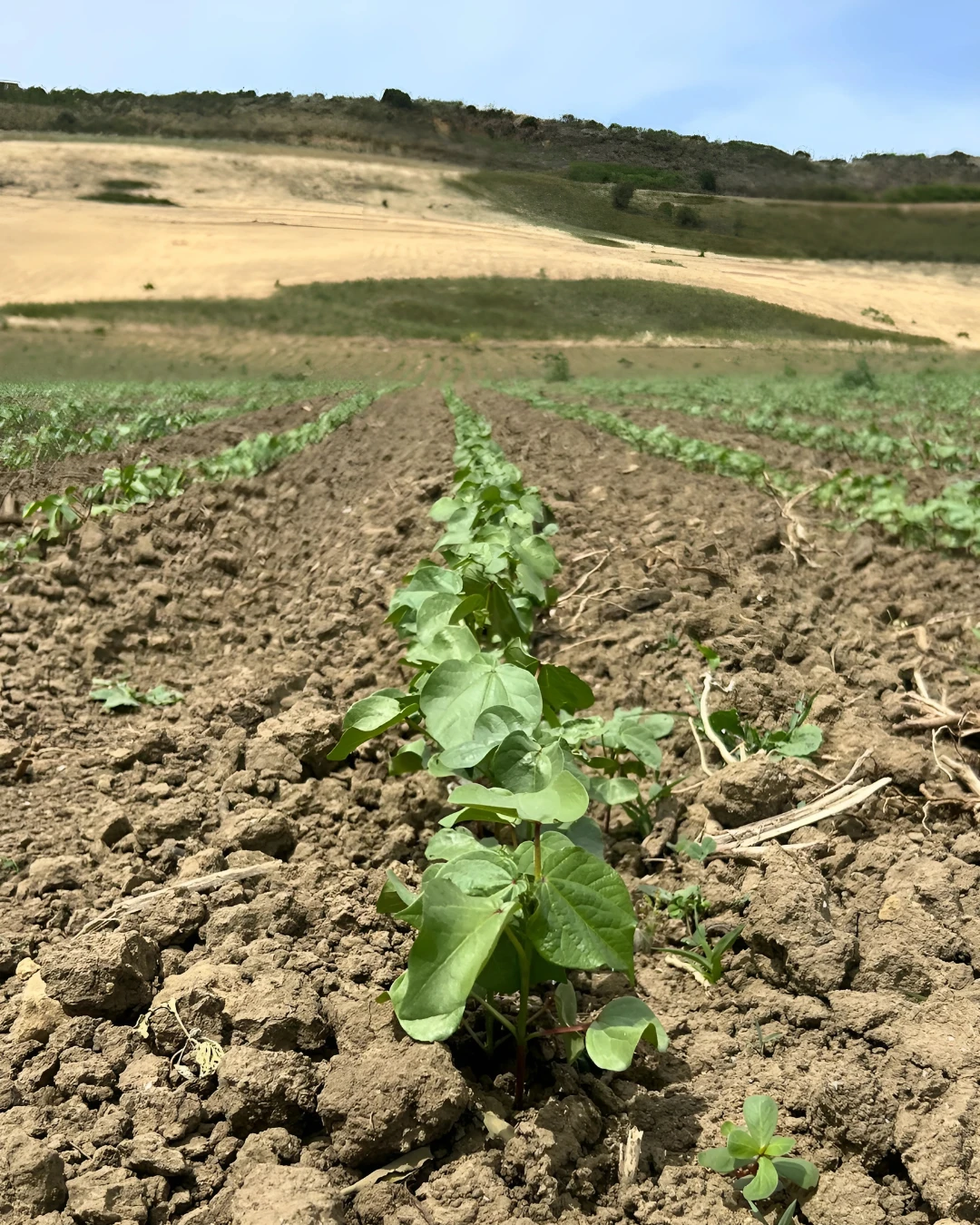
GROWTH ALONG THE ROWS
The plants grow in evenly spaced rows, gradually occupying the available space.
04 / 13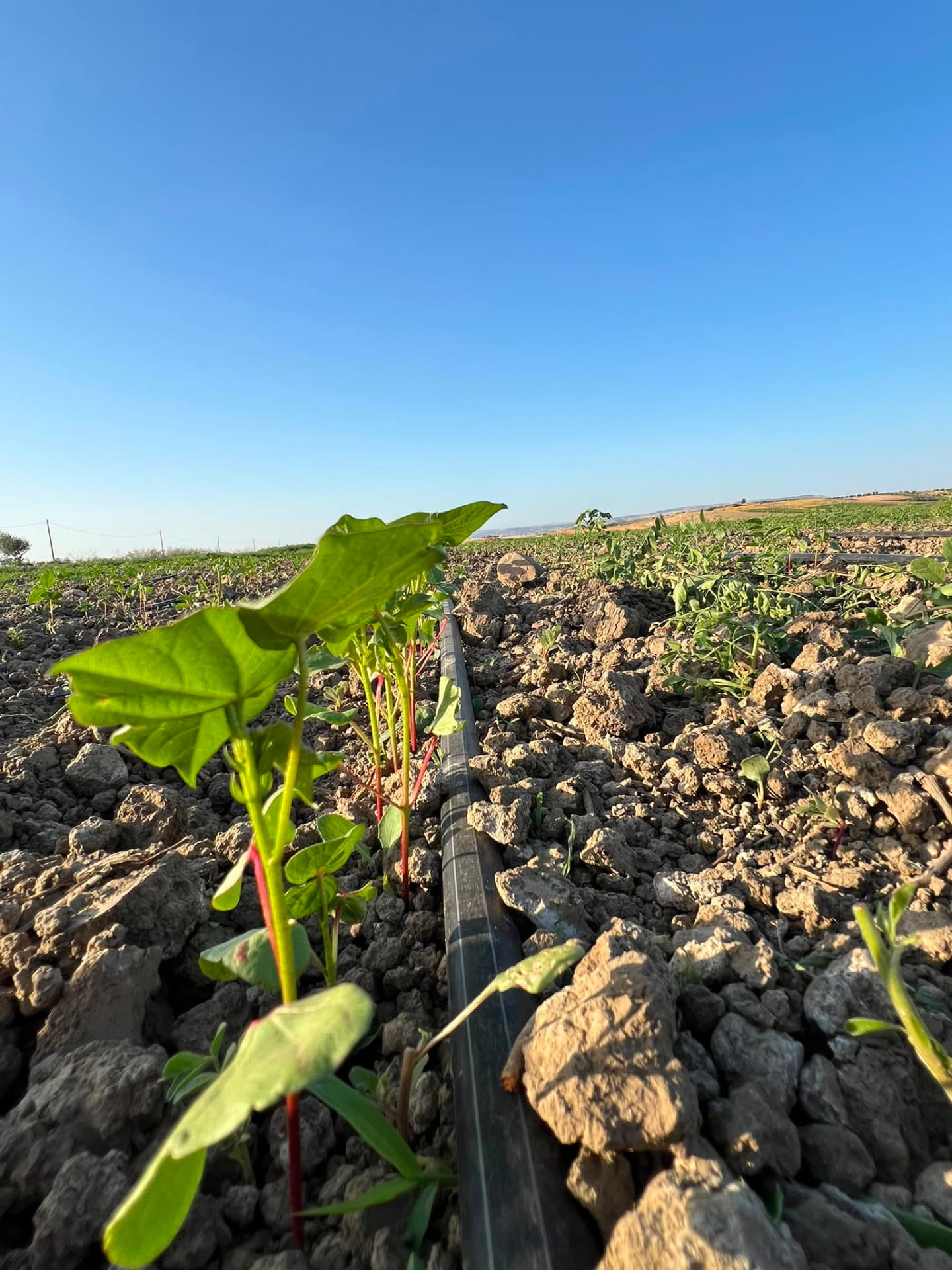
WATER AND GROWTH
Drip irrigation delivers water close to the roots according to the needs of the crop.
05 / 13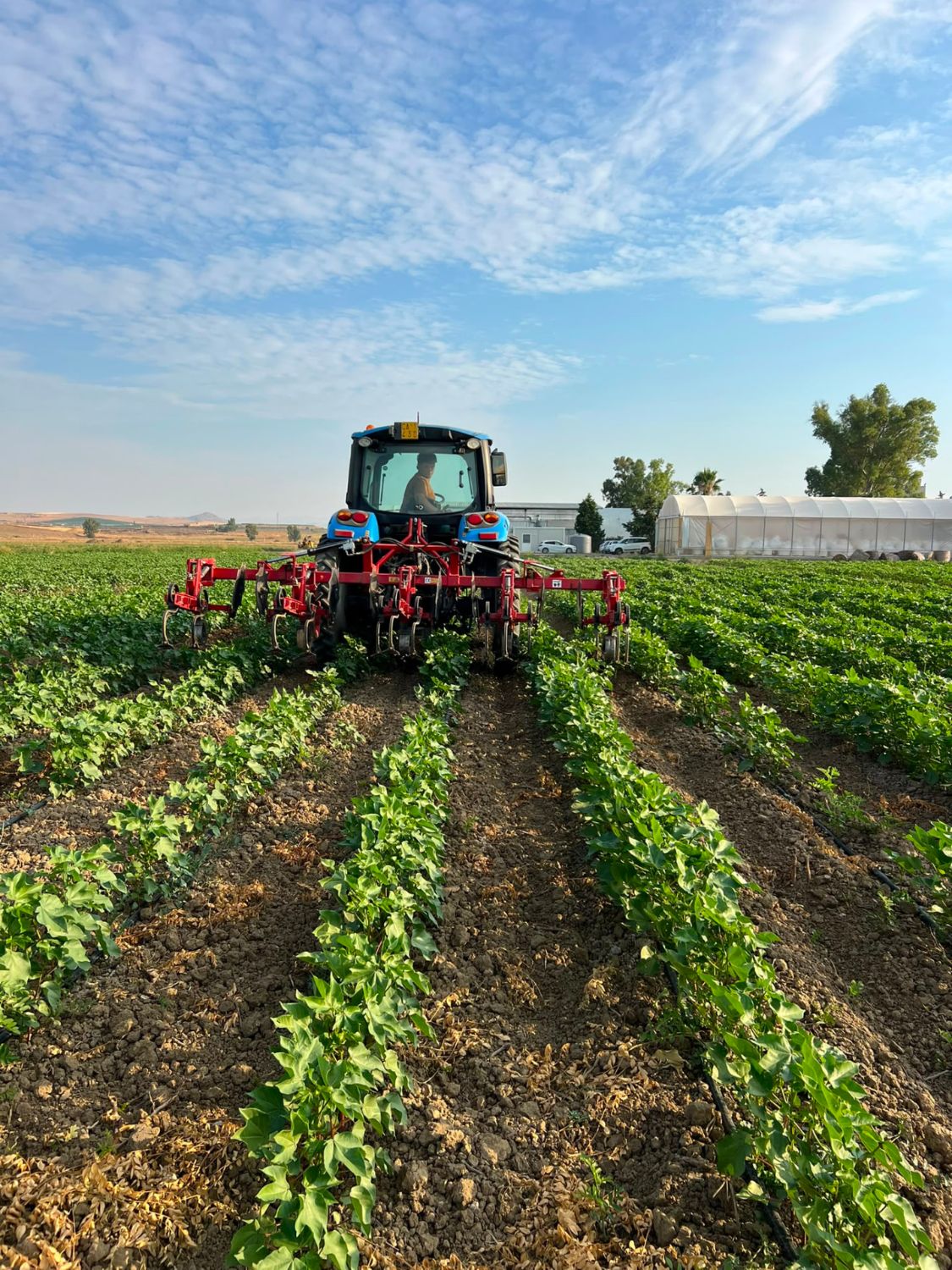
CULTIVATION BETWEEN THE ROWS
Mechanical cultivation controls weeds and helps improve soil aeration.
06 / 13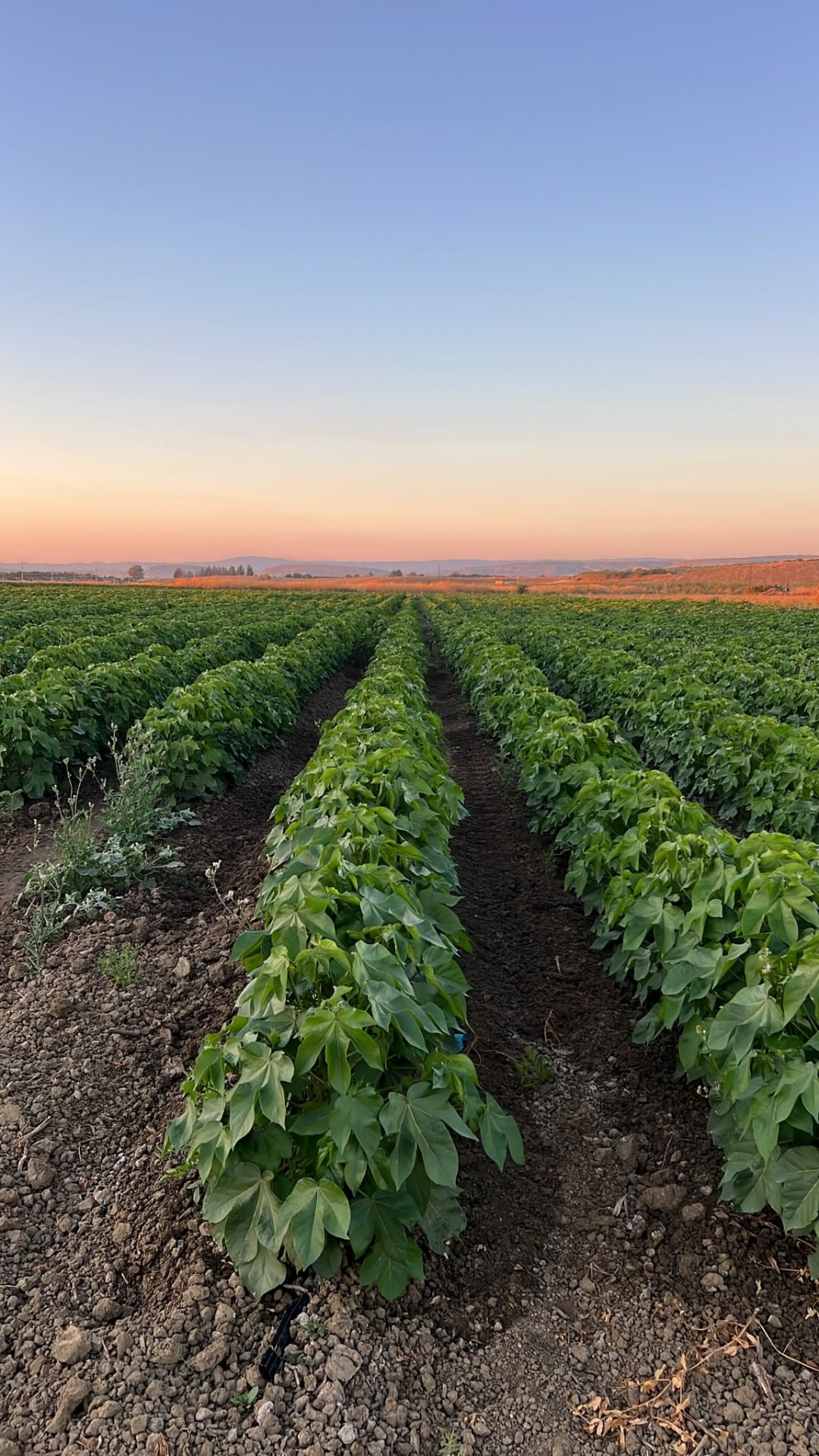
VEGETATIVE GROWTH
Stems and leaves continue to develop, and the vegetation becomes increasingly dense.
07 / 13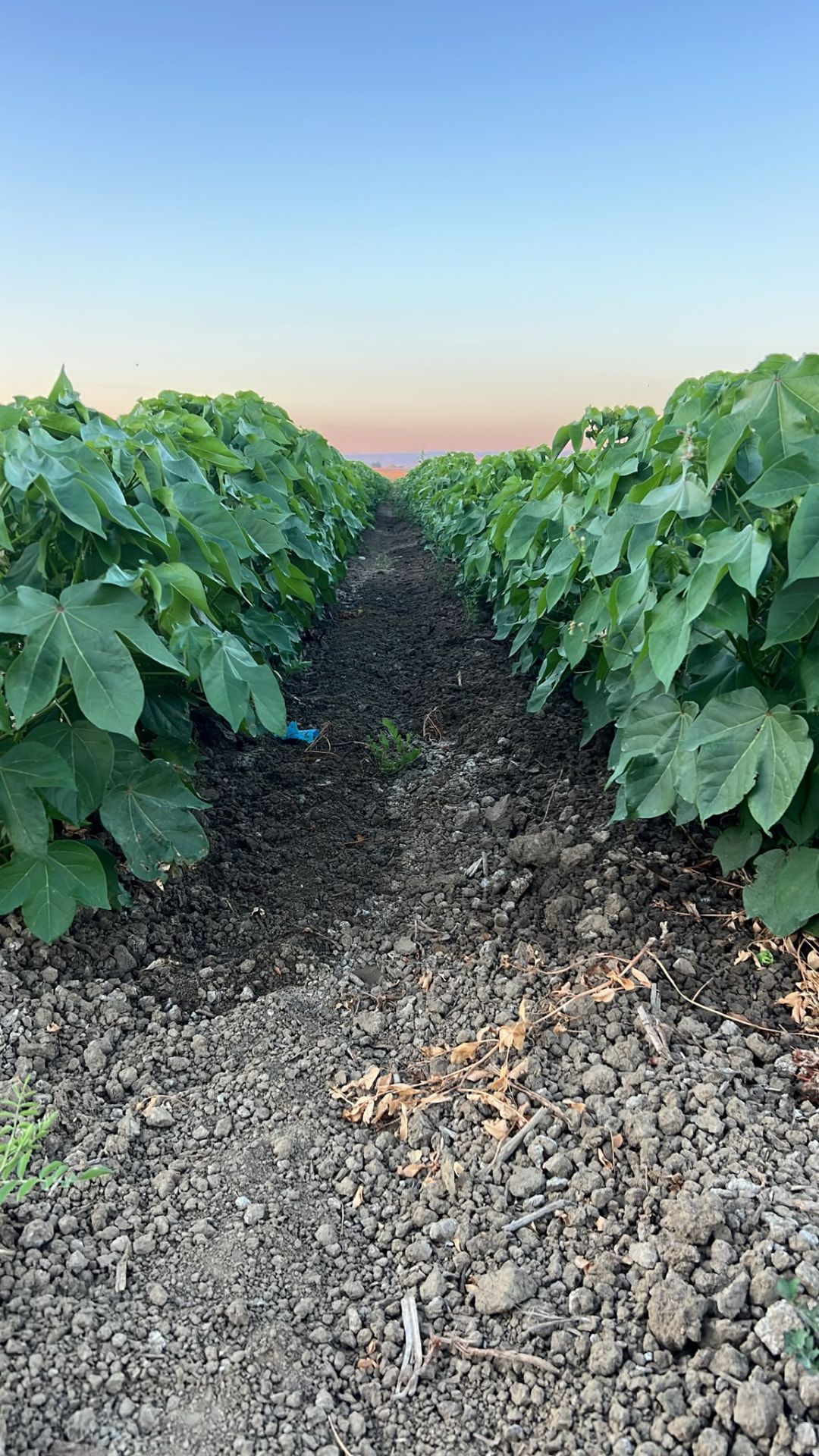
ROW CLOSURE
As the foliage grows, it covers almost all the space between the rows.
08 / 13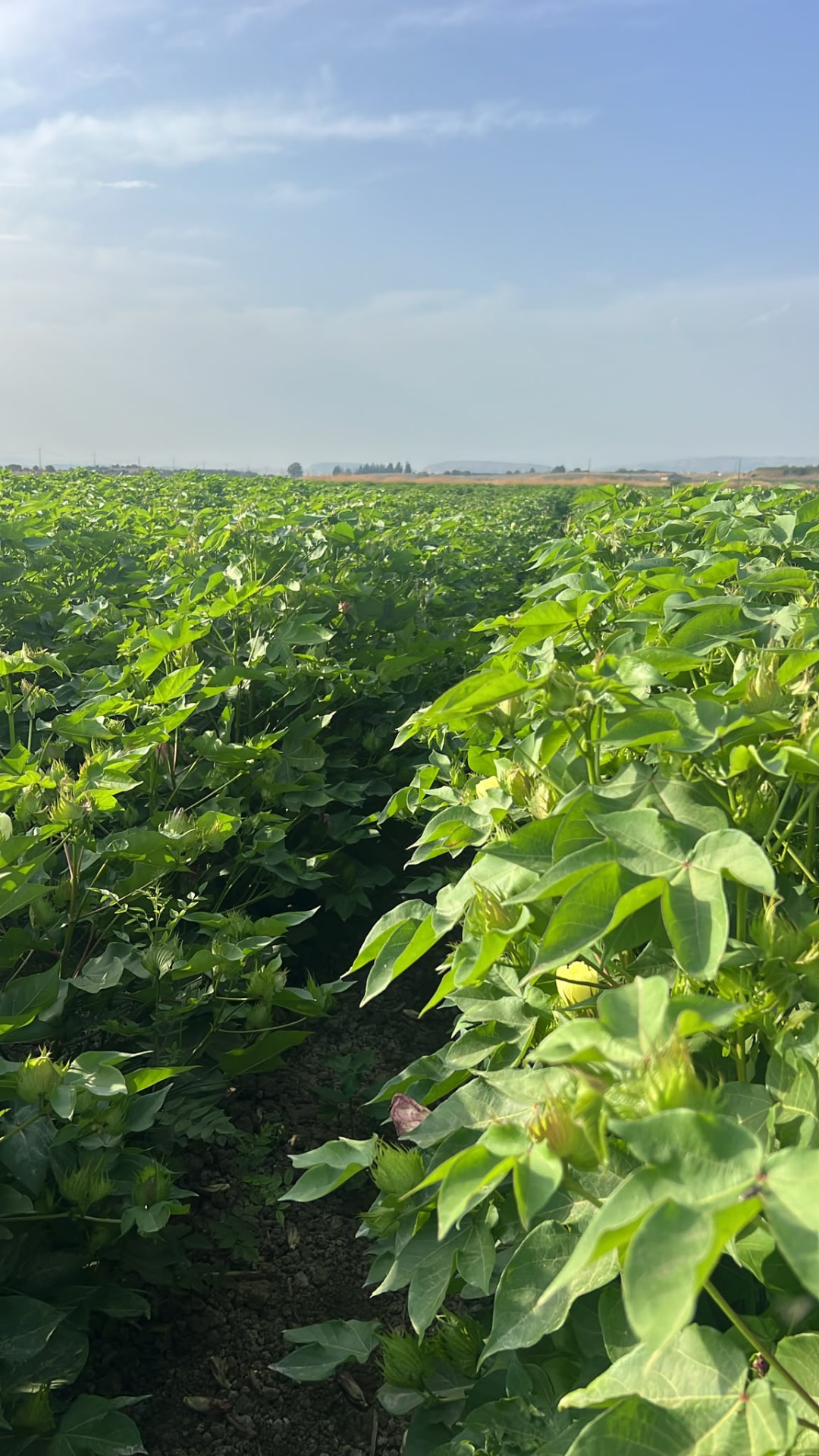
FLOWERING
The first flowers appear, changing color over the following days before they wilt.
09 / 13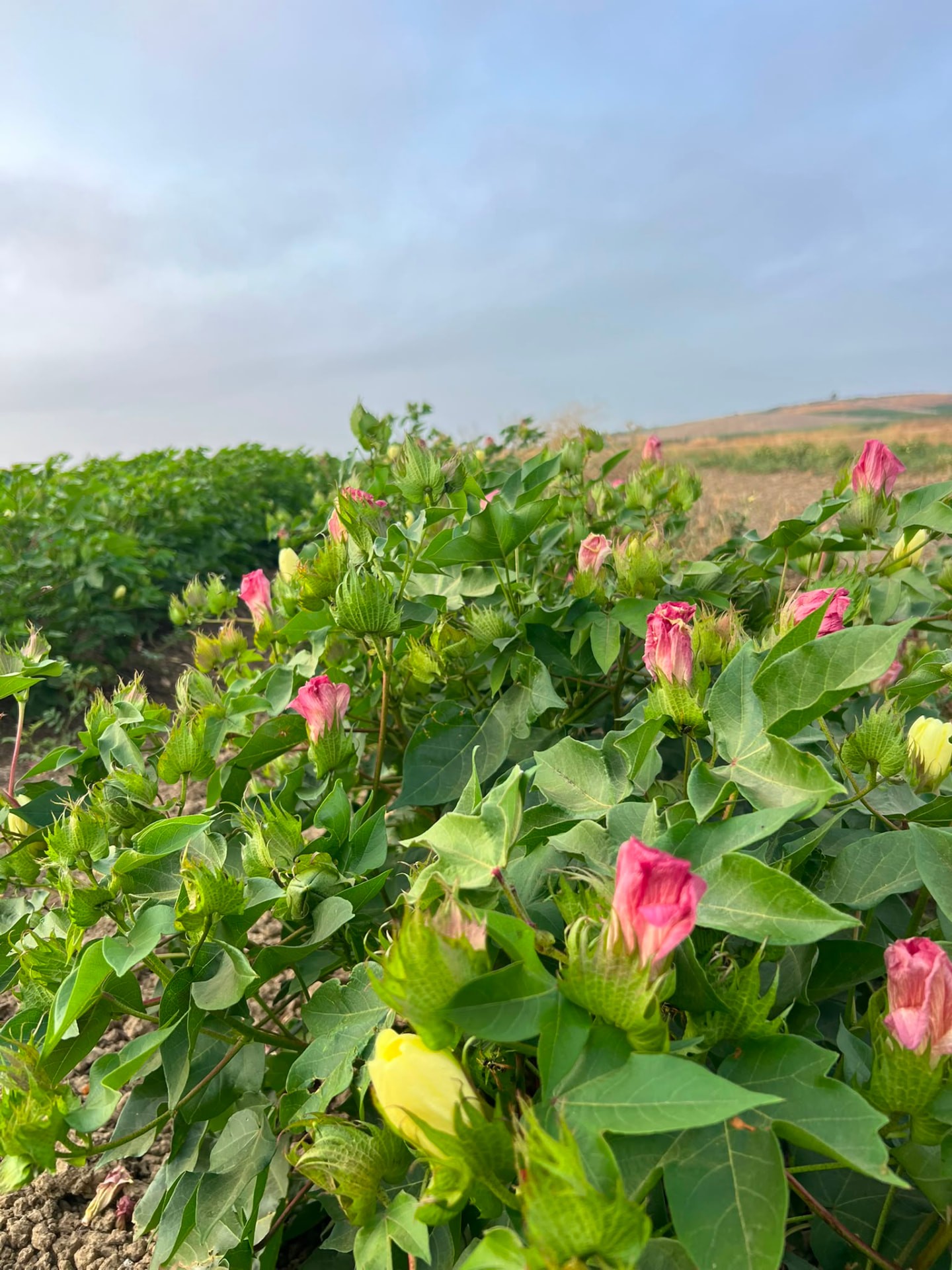
FULL BLOOM
Flowers at different stages of development can be seen throughout the field, ranging in color from creamy yellow to deep pink.
10 / 13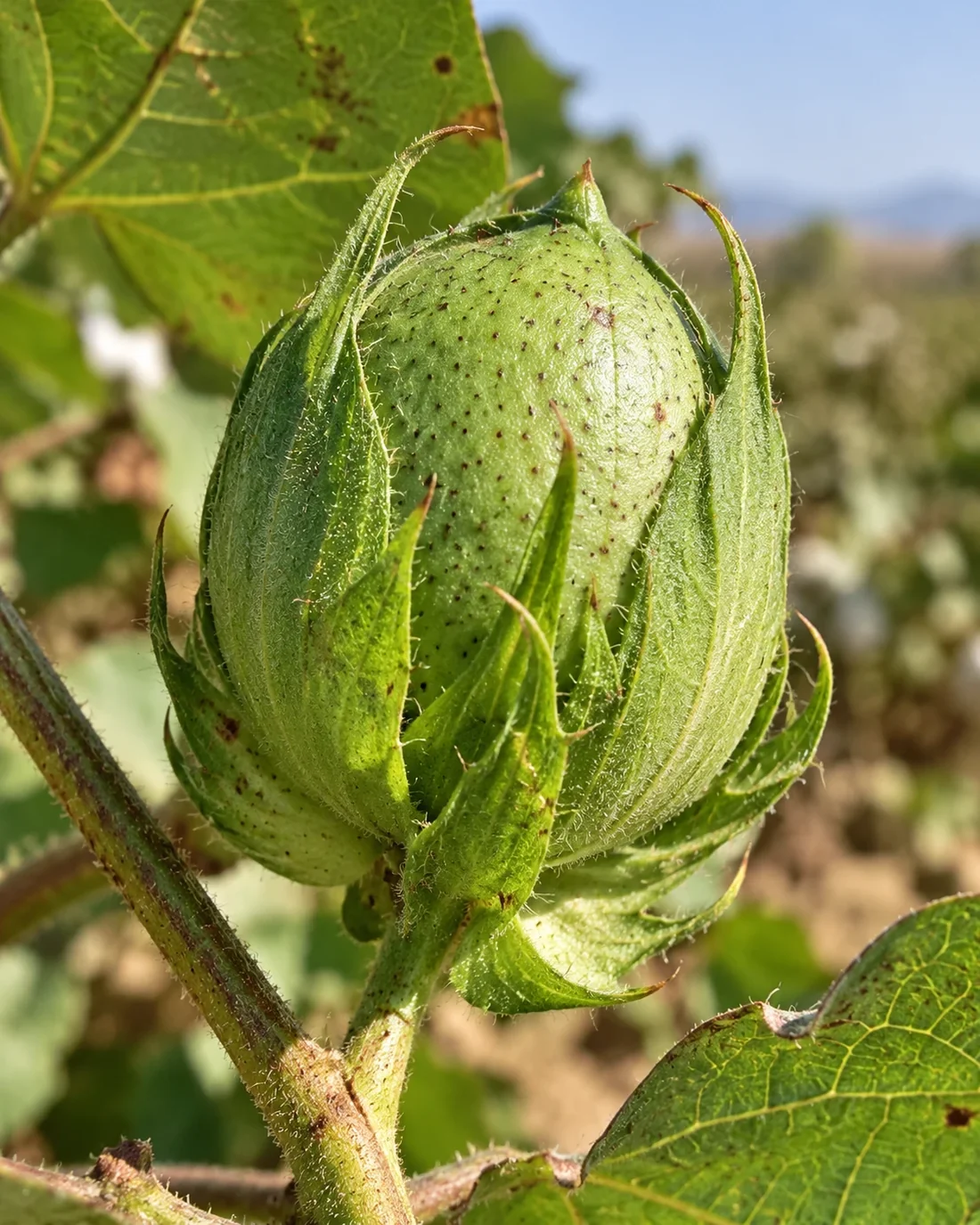
BOLL FORMATION
After fertilization, a green cotton boll develops, enclosing the seeds and the forming fiber.
11 / 13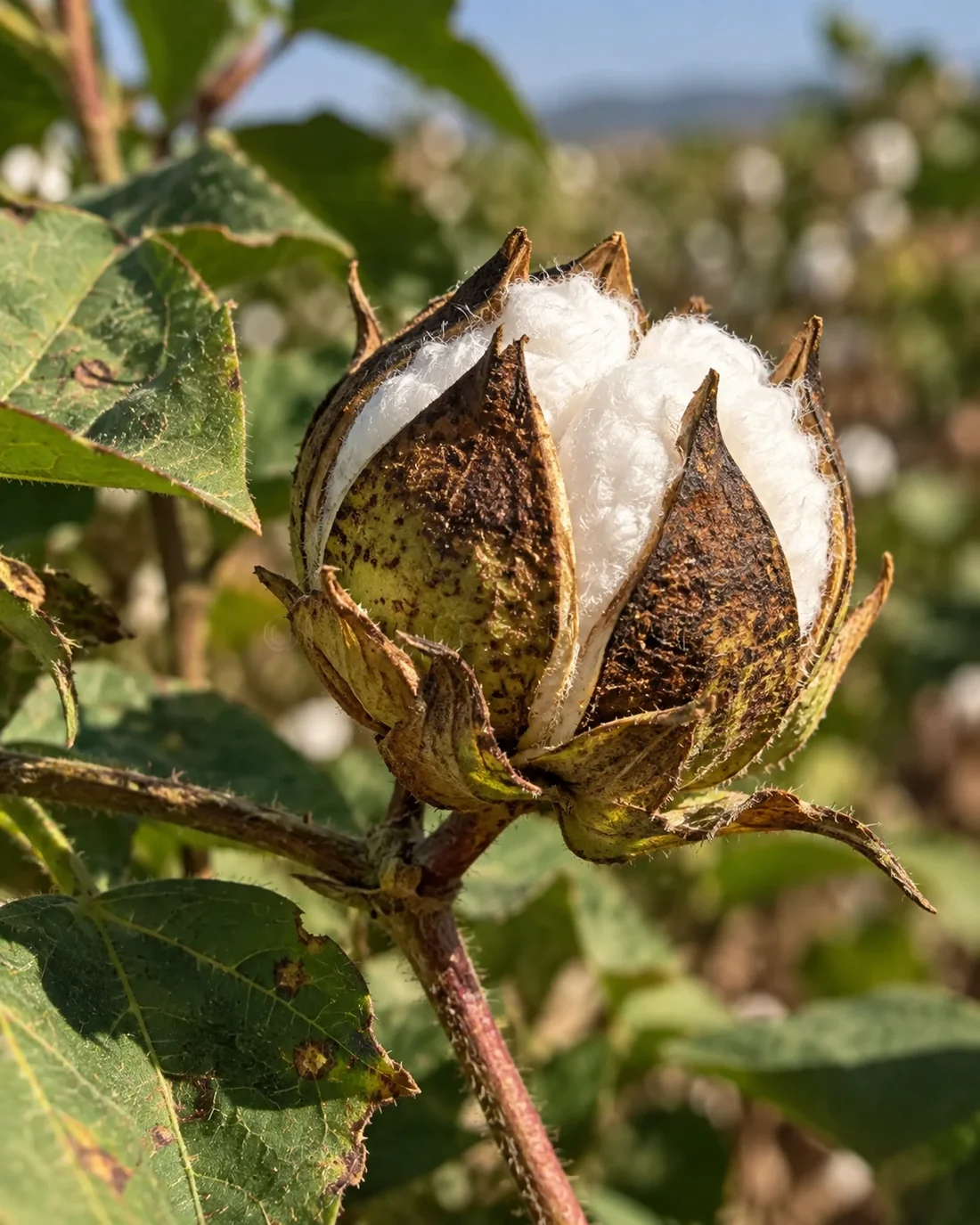
MATURATION AND OPENING
The cotton boll matures, changes color and begins to open. The white fiber gradually becomes visible.
12 / 13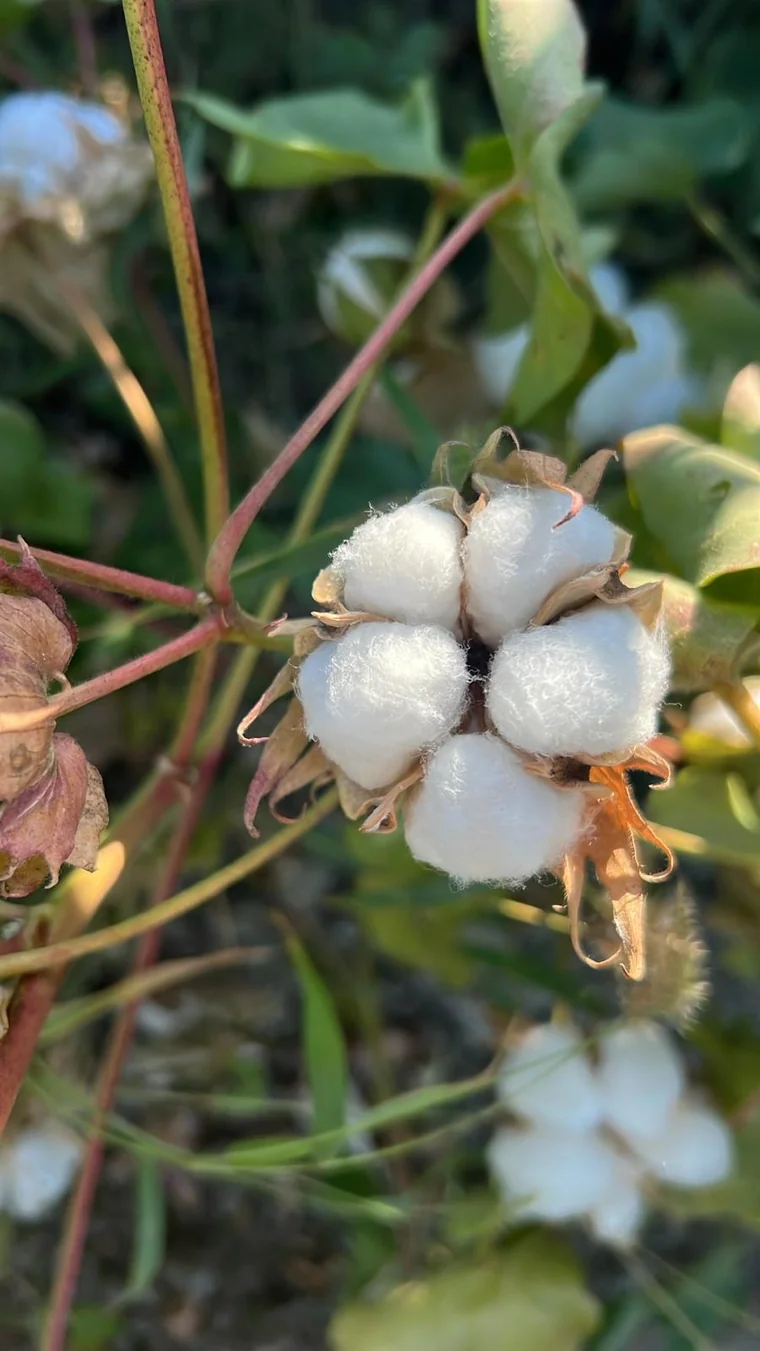
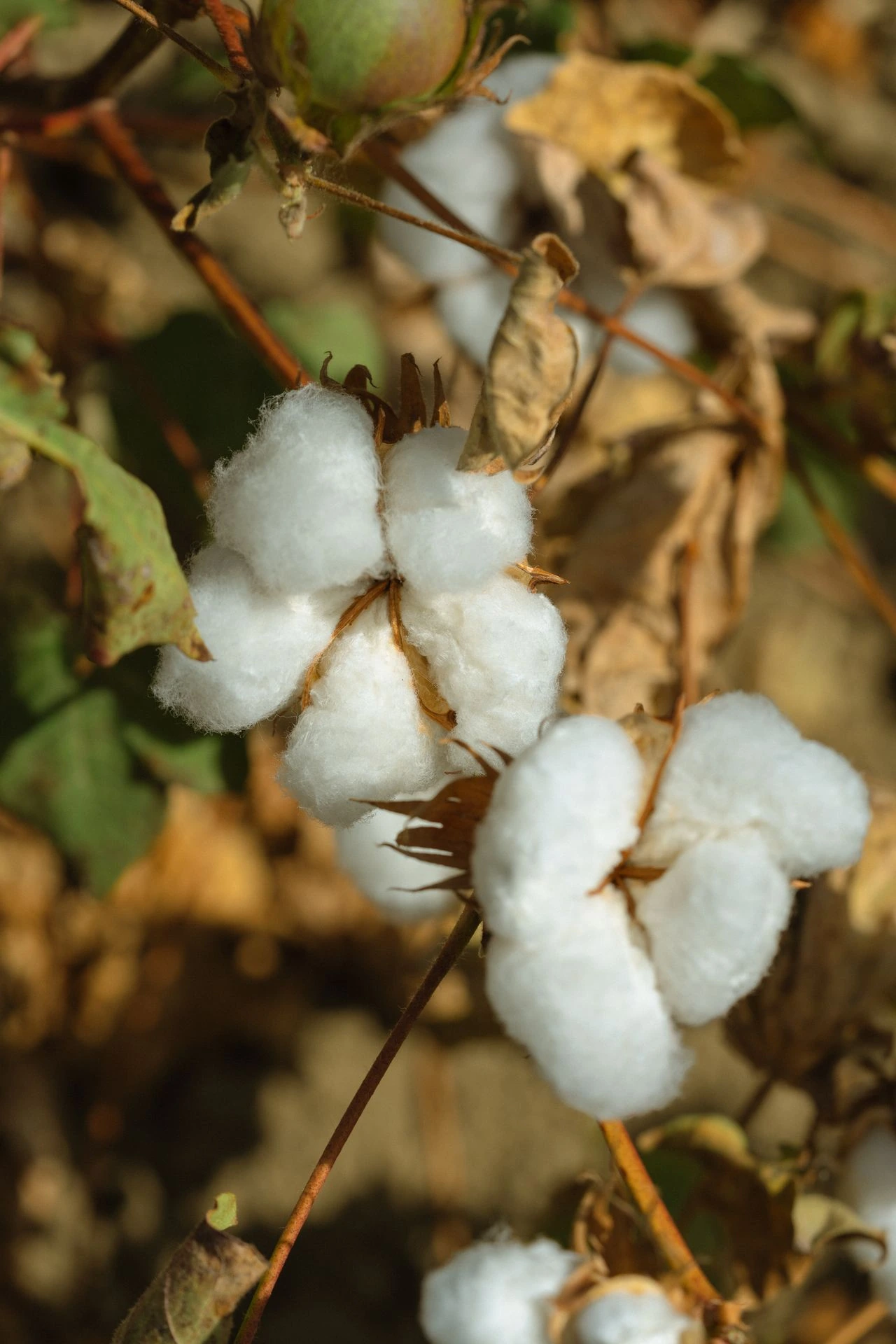
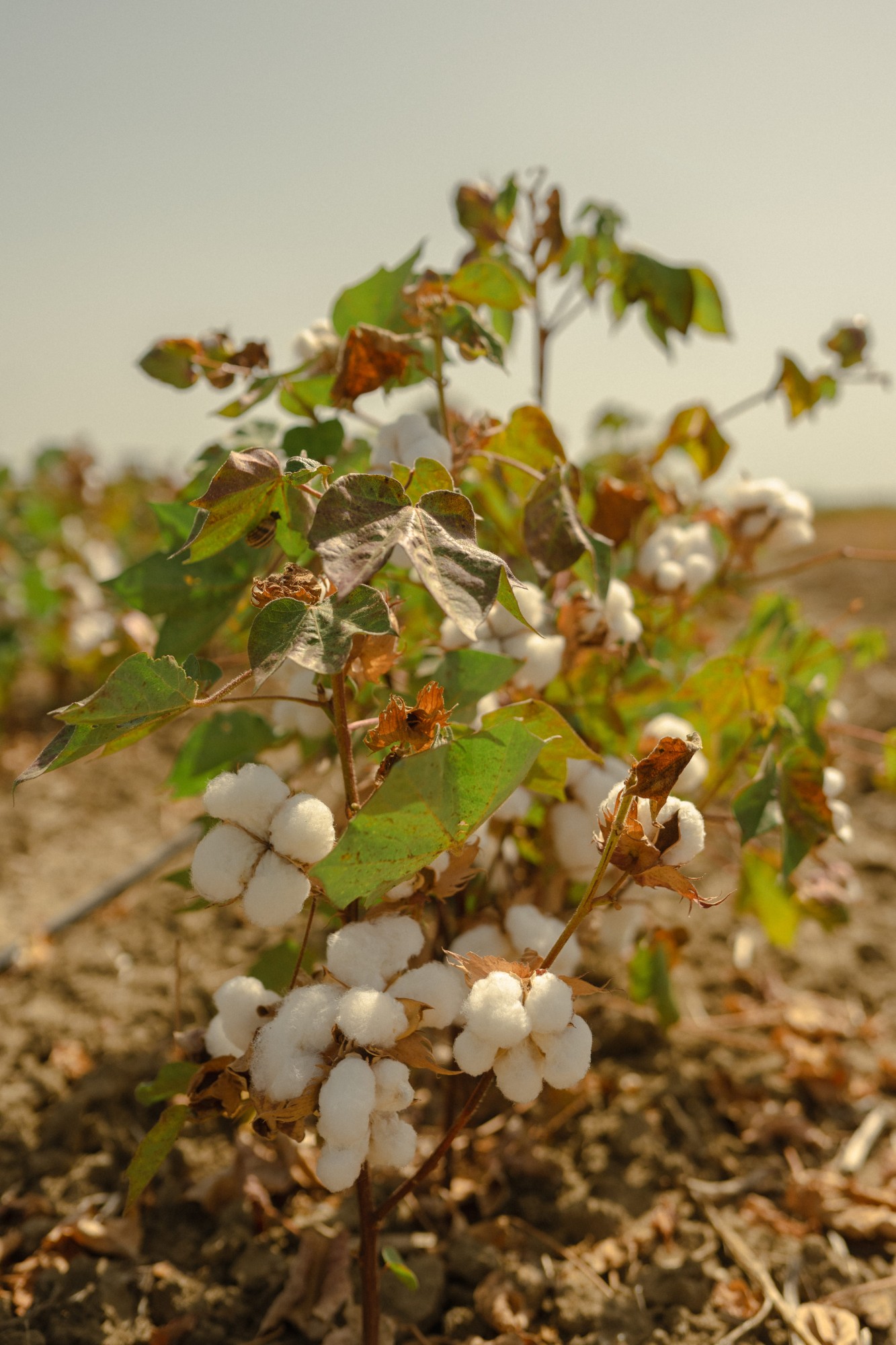
THE WHITE COTTON FIBER
The fully opened boll reveals mature white cotton fiber, ready for harvesting.
13 / 13GRAND CRU
EARTHMADE
IN ITALY.
With the expression GRAND CRU EARTHMADE IN ITALY, Gloria Terrae recognizes the importance of the agricultural characteristics that distinguish cotton grown in Sicily. The variety, soil, climate and choices made throughout the growing season all contribute to the qualities of the fiber.
In this view, Made in Italy begins with cultivation and continues through the expertise of Italian manufacturing. The seed, the work carried out in the fields, harvest timing and subsequent checks all become elements of a cotton production process whose different stages can be documented and traced.
Gloria Terrae documents the origin of Sicilian cotton and its passage into textile processing. This traceability allows brands and companies to understand the characteristics of the fiber and incorporate it into production processes based on verifiable information.
GLORIA TERRAE — EARTHMADE IN ITALY
Gloria Terrae